 English
 Español
 日本語
日本語
Product Introduction
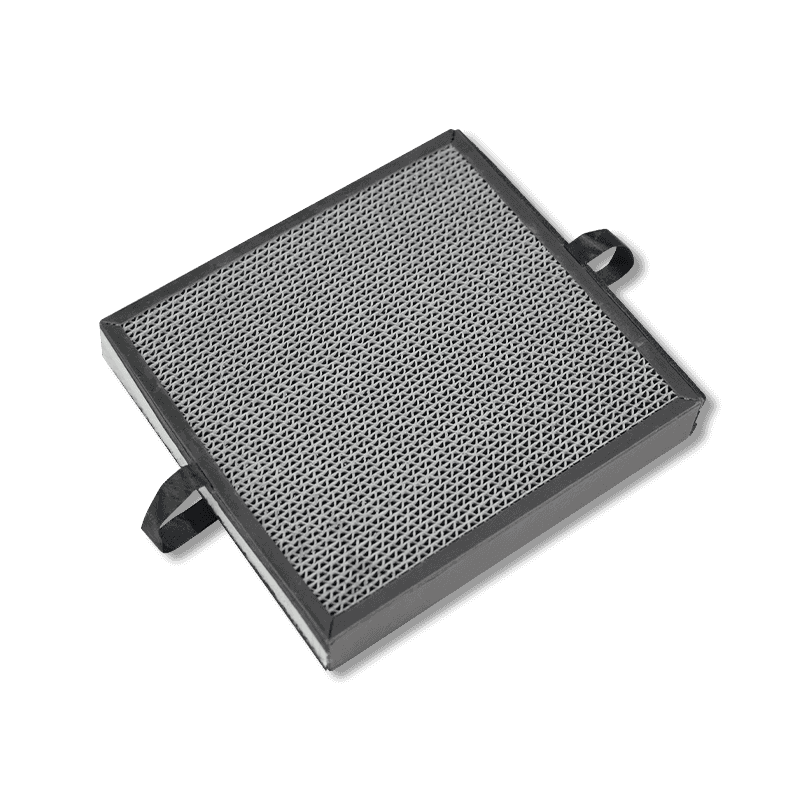
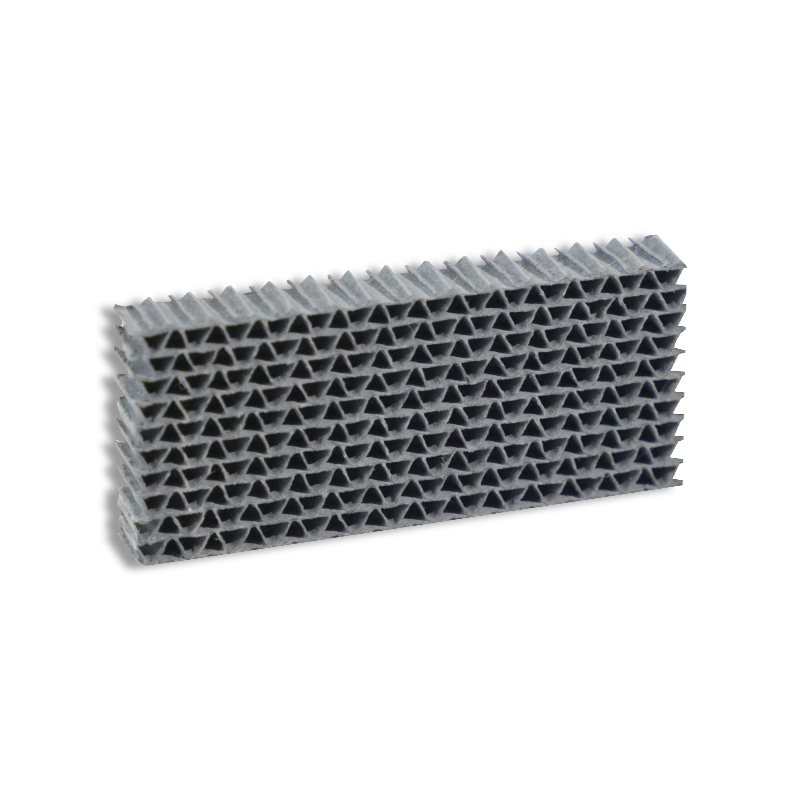
Photocatalyst technology represents the "next generation" of air purification, moving beyond simple capture and into active destruction of pollutants. Our Photocatalyst Coated Media utilizes the power of Nano-Titanium Dioxide (TiO2), a semiconductor material that reacts to light. When ultraviolet (UV) light—specifically in the UV-A spectrum—hits the coated surface, it creates "electron-hole pairs." These pairs react with water vapor and oxygen in the air to generate highly reactive Hydroxyl Radicals (·OH) and Superoxide Anions (O2-). These are some of the most powerful oxidizing agents in nature. When organic pollutants, bacteria, viruses, or odor molecules come into contact with these radicals, they are instantly oxidized and broken down into basic, harmless substances like Carbon Dioxide (CO2) and Water (H2O). This process is known as "cold combustion," as it effectively "burns" away contaminants at room temperature.
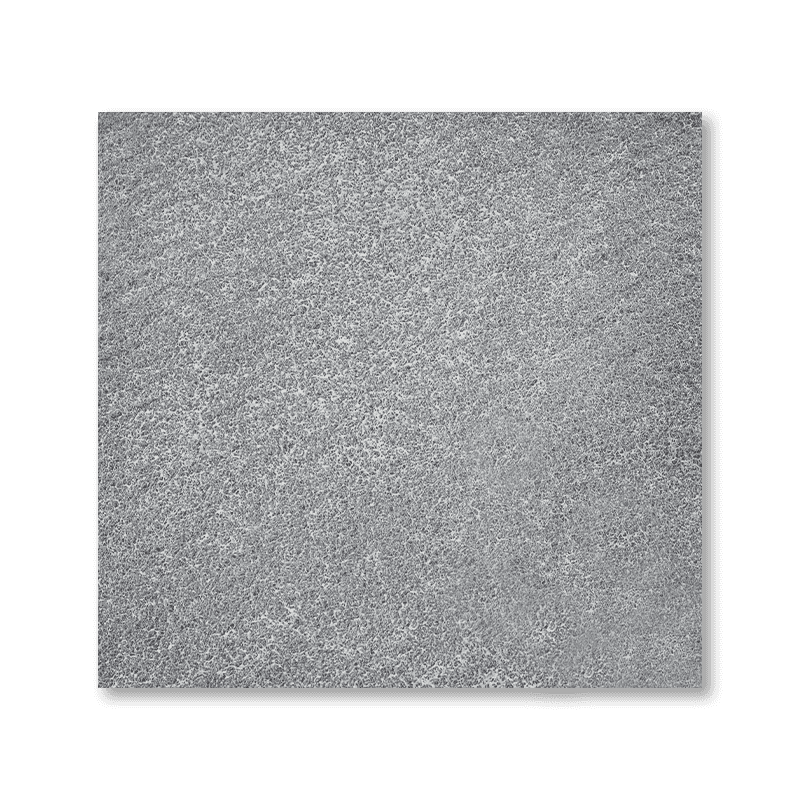
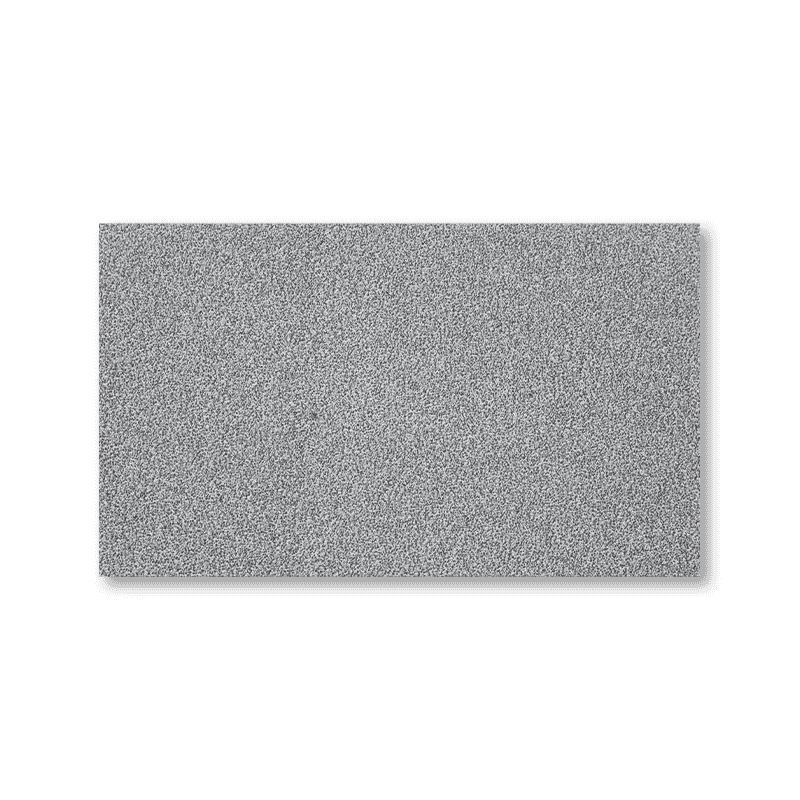
What sets Nantong Lyusen apart is our advanced coating process. We don't just "paint" the catalyst onto the surface. We use a proprietary vacuum-dipping or electrostatic spraying technique that ensures the Nano-TiO2 is bonded at a molecular level to the substrate, whether it's an aluminum honeycomb, a nickel foam, or a non-woven fabric. This prevents the catalyst from flaking off over time, which is a major defect in cheaper photocatalyst products. Furthermore, our catalyst is engineered to be active under low-intensity UV light, and we even offer "Visible Light" active versions for specialized applications. By integrating our photocatalyst media into your air purification equipment, you are providing a system that not only filters the air but actively sterilizes it, killing 99.9% of pathogens and permanently eliminating VOCs without producing any harmful secondary ozone. This makes it an ideal solution for medical, residential, and high-end industrial environments where pure, sterile air is a non-negotiable requirement.
Detailed Technical Specifications
To ensure optimal performance, the photocatalytic media must be matched with the correct light source and airflow velocity. We provide a range of substrates that allow engineers to design for different pressure drops and structural needs. Our Nano-TiO2 particles are sized between 5-10 nanometers, providing a massive reactive surface area that maximizes the "collision probability" between air pollutants and the catalytic sites. Below are the key technical parameters that define our photocatalyst product line. We test our media's degradation rate using standard gases like Acetaldehyde and Formaldehyde to ensure every batch meets the required purification efficiency.
| Performance Metric | Alu-Honeycomb Base | Nickel Foam Base | Non-woven Fabric |
|---|---|---|---|
| Catalyst Material | Nano-TiO2 (Anatase) | Nano-TiO2 + Doping | Nano-TiO2 / Carbon |
| Degradation Rate (HCHO) | > 98% | > 95% | > 90% |
| Bacteria Kill Rate | > 99.9% | > 99.9% | > 99.0% |
| Required Light Source | UV-A (365nm) | UV-A / Visible | UV-A / LED |
| Substrate Porosity | 95% Open Area | > 90% (20-40 PPI) | High Breathability |
| Coating Thickness | 2.0μm - 5.0μm | 1.5μm - 3.5μm | 1.0μm - 2.5μm |
| Service Life | 24 - 36 Months | 18 - 24 Months | 12 - 18 Months |
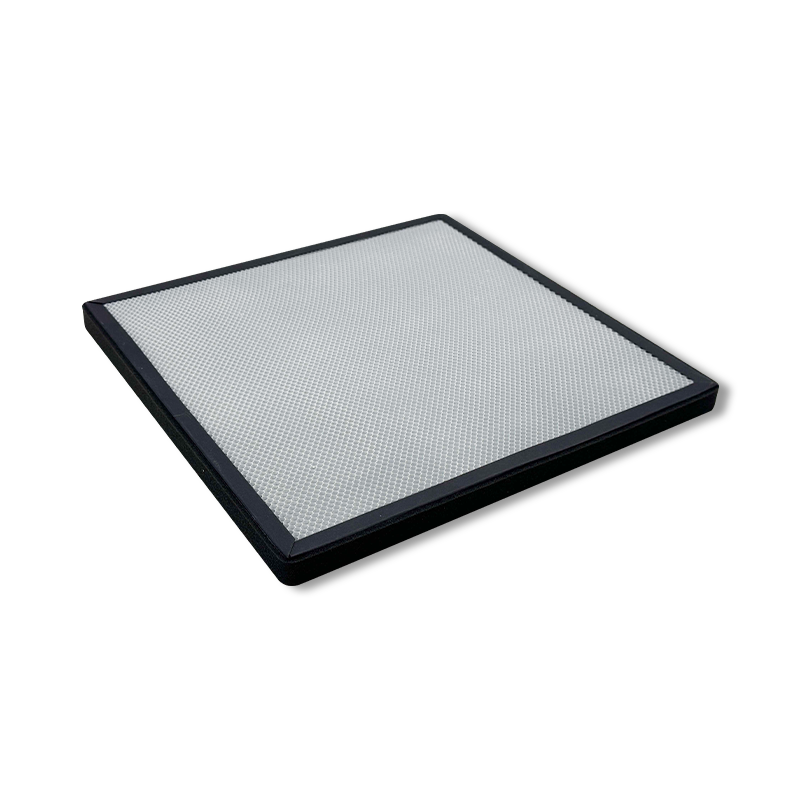
We also offer "Doped" photocatalysts, where metals like Silver (Ag) or Platinum (Pt) are added to the TiO2 lattice. This doping enhances the separation of the electron-hole pairs, significantly increasing the reaction speed and allowing the catalyst to work even under weak light conditions. Our media can be supplied in standard 495x495mm panels, custom circular discs for portable purifiers, or flexible rolls for large-scale duct wrapping. We ensure that the substrate is "UV-Stable," meaning it will not degrade or become brittle under constant exposure to the UV lamps used in your purification systems.
Primary Industrial Applications
Photocatalyst media is the gold standard for Pathogen Control and Sterilization. In Hospitals and Medical Facilities, our TiO2-coated aluminum honeycombs are installed in the upper-room air disinfection units and HVAC returns. They provide a continuous, chemical-free way to kill airborne bacteria, influenza viruses, and even antibiotic-resistant "superbugs." Unlike chemical fogging, photocatalysis is safe to run while people are in the room, providing 24/7 protection for patients and healthcare workers. This technology is also vital in Pharmaceutical Cleanrooms and Food Processing Facilities, where maintaining a sterile environment is essential to prevent product contamination and spoilage.
In the Automotive Industry, photocatalyst filters are increasingly used in the cabin air systems of luxury vehicles. They serve a dual purpose: they break down the "new car smell" (which is actually a cocktail of toxic VOCs like benzene and formaldehyde released from plastics and glues) and they keep the cabin air free of allergens and bacteria. This contributes to a premium driving experience and long-term health for the passengers. Similarly, in Public Transportation (subways, trains, and buses), our flexible photocatalyst mats are integrated into the ceiling ventilation units to reduce the risk of cross-infection in crowded environments.
Another growing application is in Commercial Office Buildings and "Smart Homes." As people become more aware of "Sick Building Syndrome," there is a higher demand for air purifiers that do more than just catch dust. Our photocatalyst media is used in premium air purifiers to remove kitchen smells, pet odors, and cigarette smoke. Because the catalyst is not "used up" like activated carbon, it provides a much more sustainable and long-term solution for odor control. It is also used in Public Washrooms and Garbage Rooms to continuously neutralize ammonia and thiol odors. From high-tech aerospace cabins to the humble home air cleaner, photocatalysis is transforming how we think about "clean air" by providing a solution that is active, destructive, and permanent.
Core Technical Advantages
The most profound advantage of our Photocatalyst Coated Media is its Ability to Decompose Pollutants Permanently. Most filters are "storage devices"—they trap pollutants inside their structure. Eventually, these filters become full and must be discarded. If the filter is not changed, it can actually become a breeding ground for bacteria or begin to release the trapped gases back into the air. Photocatalysis is a catalytic process. The TiO2 is not consumed in the reaction; it simply provides the site for the reaction to happen. This means the filter doesn't "fill up." As long as there is light and airflow, the catalyst will keep working, breaking down pollutants into harmless CO2 and water. This leads to a significantly longer service life—often 2 to 3 years—compared to carbon filters which may only last 6 months.
A second critical advantage is Broad-Spectrum Antimicrobial Action. While HEPA filters can trap bacteria, they don't kill them. Bacteria can survive and even multiply on the surface of a standard filter. Photocatalysis, however, physically ruptures the cell walls of microorganisms through oxidation. This makes it an "active" sterilization tool. It is effective against a vast array of pathogens, including viruses, bacteria, mold spores, and fungi. Furthermore, because the oxidation process is a physical-chemical reaction, microorganisms cannot develop "resistance" to it, unlike with antibiotics or some chemical disinfectants. This makes it a future-proof solution for maintaining high hygiene standards in any environment.
Lastly, our media offers Superior Safety and Sustainability. Many alternative sterilization methods, such as Ozone Generators or some Ionizers, produce harmful byproducts that can irritate the lungs. Our photocatalyst process produces zero ozone and zero harmful secondary pollutants. It is a "green" technology that relies on light and oxygen. By reducing the frequency of filter replacements, it also significantly reduces the amount of waste sent to landfills. For OEM manufacturers, our media is easy to integrate into existing designs; it is lightweight, rigid (in honeycomb form), and requires no high-voltage power—only a standard UV lamp. This simplicity, combined with its high-tech appeal and proven efficacy, makes it a powerful selling point for any air purification product.
Logistics, Payment & Global Shipping
Nantong Lyusen is committed to providing a professional and efficient export experience for our international B2B clients. We offer a range of payment options designed to facilitate smooth global trade. Our primary terms are T/T (Telegraphic Transfer), with a 30% deposit to initiate production and the remaining 70% paid prior to shipment or upon presentation of the Bill of Lading. For our established strategic partners, we offer Documentary Collections (D/P) or Net-30 credit terms. For large-scale municipal or institutional projects, we are fully equipped to handle Letter of Credit (L/C) transactions, ensuring that all contractual milestones and inspection requirements are met before payment is released. We provide full transparency in pricing, including detailed breakdowns of any tooling or customization costs for OEM orders.
Logistically, photocatalyst media requires careful handling to protect the Nano-TiO2 coating. We pack our panels in custom-fitted, anti-static, and shock-absorbent packaging. Each unit is individually wrapped in a protective PE film and then placed in reinforced, multi-layer corrugated boxes. For international air freight, we use extra corner protection and "fragile" labeling to ensure the goods are handled with care by couriers like FedEx, UPS, and DHL. For sea freight, we ship primarily through Shanghai Port, utilizing specialized sea-worthy pallets that are shrink-wrapped to prevent moisture ingress. We offer comprehensive shipping terms including FOB, CIF, and DDU/DDP, depending on your preference for managing import duties and local logistics. Every order is accompanied by a Certificate of Conformity (CoC) and a batch-specific Test Report, ensuring that the media you receive meets the exact technical specifications required for your air purification systems. Our dedicated export team monitors every shipment from our factory gate to your destination, providing proactive communication and documentation support at every step.
- Q: Do I need a specific type of UV light for the photocatalyst to work?
- A: Yes, standard photocatalysts (TiO2) are most active under UV-A light with a wavelength of approximately 365nm. This is often called "blacklight." While UV-C (254nm) used for germicidal lamps will also trigger the reaction, it is more efficient to use UV-A for pure photocatalysis. We can also provide "Visible Light" catalysts that can be triggered by standard LED or sunlight, though these are typically more expensive.
- Q: How can I be sure the TiO2 coating won't flake off and enter the air stream?
- A: This is a common concern with low-quality products. At Nantong Lyusen, we use a high-temperature curing process and specialized binders that create a strong chemical bond between the catalyst and the substrate. We conduct "Adhesion Tests" and "Air Erosion Tests" at high velocities (up to 10m/s) to ensure zero particle shedding, making our media safe for use in sensitive environments like hospitals.
- Q: Does the photocatalyst filter ever need to be cleaned?
- A: Because the catalyst decomposes organic matter, it is technically "self-cleaning" for molecular pollutants. However, if the filter is exposed to heavy inorganic dust, the dust can cover the catalyst sites and block the light, reducing efficiency. We always recommend using a high-quality pre-filter (G4 or F7 grade) before the photocatalyst stage to keep the surface clean. If the surface does become dusty, it can be gently cleaned with compressed air.
- Q: Can I replace my activated carbon filter with a photocatalyst filter?
- A: Photocatalysis is excellent for continuous destruction of low-to-medium concentrations of VOCs and odors. However, if you have a sudden, very high concentration "burst" of a chemical gas, activated carbon is better at quickly adsorbing that mass. For the best air purification performance, many of our clients use a "hybrid" system: a carbon filter for initial high-capacity adsorption followed by a photocatalyst filter for continuous sterilization and long-term VOC decomposition.