 English
 Español
 日本語
日本語
Cold Catalysts Break Down Pollutants Chemically Rather Than Just Trapping Them
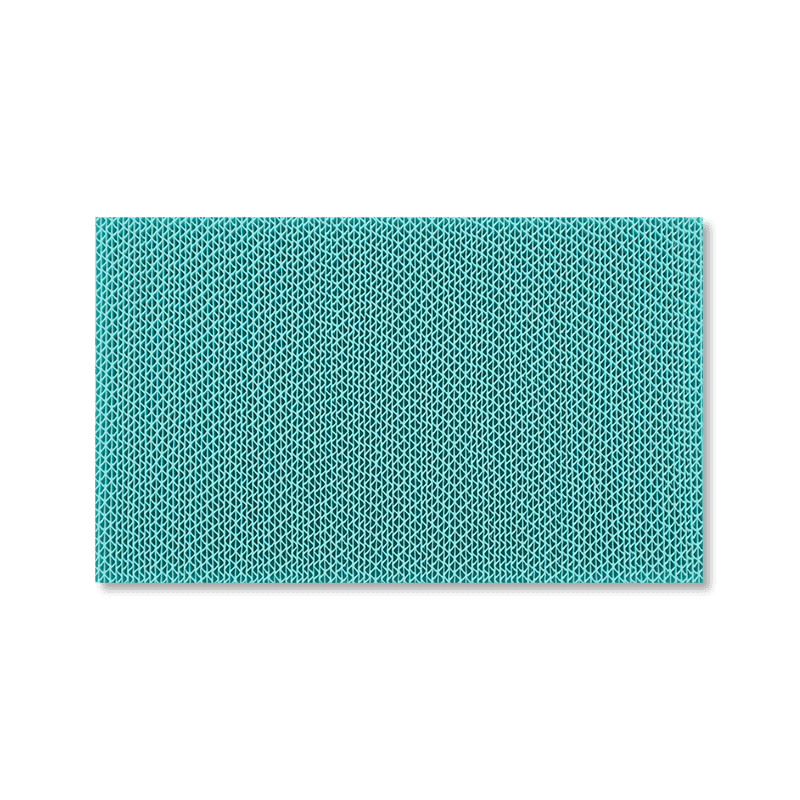
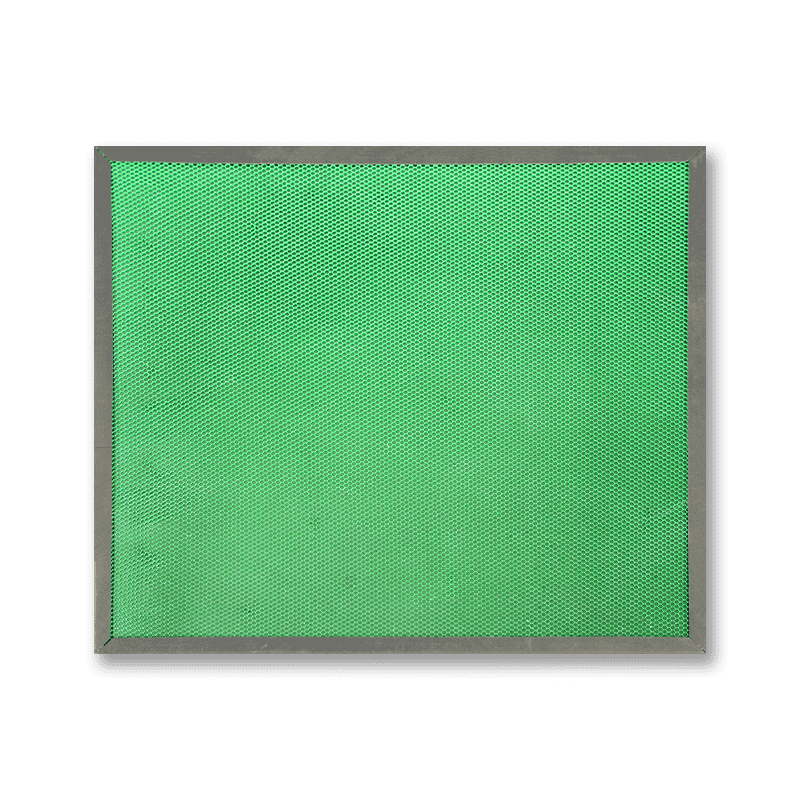
Sponge cold catalyst filters are effective against formaldehyde and VOCs because they do not merely capture pollutants the way a conventional filter does — they chemically oxidize them at room temperature, converting harmful gases into harmless byproducts. Cold catalyst technology typically uses manganese oxides (MnOx) or copper oxides (CuOx) to oxidize formaldehyde and other VOCs without requiring heat, light, or an external energy source. This reaction breaks formaldehyde down into water and carbon dioxide, and critically, the catalyst itself is not consumed in the process, meaning it can continue facilitating this reaction indefinitely rather than becoming saturated the way adsorption-only media eventually does. When this catalytic material is embedded into a porous sponge substrate, the open-cell structure maximizes air-to-catalyst contact area, allowing a continuous stream of indoor air to be treated efficiently even at normal room temperature and pressure.
What "Cold Catalyst" Actually Means
The term "cold catalyst" distinguishes this technology from catalytic processes that require elevated temperatures or external light sources to function. Many industrial catalytic converters rely on heat to drive oxidation reactions, but cold catalyst filters are engineered to operate effectively under ambient indoor conditions.
The Core Chemical Reaction
At the heart of a cold catalyst sponge is a metal oxide compound that facilitates oxidation without being consumed. The catalyst facilitates a chemical reaction that breaks down formaldehyde into harmless substances like water and carbon dioxide, without consuming the catalyst itself, which is the defining characteristic that separates true catalytic filtration from simple physical adsorption. Patent documentation on manganese-oxide-based filtration describes this mechanism in more technical terms: MnOx particles mounted in a filter oxidize formaldehyde, converting the harmful chemical into much less harmful CO2 and H2O, while simultaneously offering an adsorptive function that pulls VOC molecules out of the air stream and holds them at the catalyst surface long enough for the reaction to occur.
Why This Matters Compared to Adsorption-Only Filters
Traditional activated carbon filters work purely through adsorption — pollutant molecules stick to the carbon's porous surface, but the carbon does not chemically alter them. Over time, every adsorption site fills up, and the filter's capacity is exhausted. Cold catalyst technology changes this dynamic fundamentally: it offers significantly improved formaldehyde removal efficiency and capacity compared to untreated activated carbon, precisely because the catalytic reaction continuously regenerates active sites by converting trapped formaldehyde molecules into gases that simply diffuse away, rather than leaving the site permanently occupied.
Why the Sponge Structure Enhances Catalytic Performance
The physical form of the filter matters as much as the chemistry embedded within it. A sponge-like, open-cell foam structure is particularly well suited to hosting catalytic material because it maximizes the surface area exposed to airflow while still allowing air to pass through with minimal resistance.
Maximizing Contact Between Air and Catalyst
Patent research on aldehyde-removal filtration describes a sponge-like mesh made up of a network of filament-like elements combined with active compounds in a specific weight ratio, designed so that contaminated air passing through has extended contact time with the reactive coating on every strand of the mesh. This design philosophy is consistent across many catalytic sponge products, since the three-dimensional network of a foam structure offers vastly more internal surface area per unit volume than a flat filter sheet of the same footprint.
Surface Area and Particle Size
The catalytic particles themselves are engineered at a very small scale to further boost effective surface area. According to patent documentation on manganese-oxide catalytic filtration, MnOx particles may be sized in the range of 100 to 400 nanometers, while the activated carbon substrate they are paired with often has a surface area between 800 and 1,300 square meters per gram. This combination of catalytic and adsorptive properties arises specifically because of the very high surface area per unit mass that such extremely small particles provide, allowing a relatively small volume of catalytic material to interact with a large volume of passing air.
Performance Data: How Effective Are These Filters in Practice?
Laboratory and patent testing data give a concrete picture of how cold catalyst sponge filters perform under real airflow conditions, including both their strengths and their practical limitations.
Removal Efficiency Under Test Conditions
Controlled testing of a sponge-like catalytic mesh found that during the first 100 to 150 minutes of operation, the filter absorbed approximately 80% of the formaldehyde present in an air stream with a concentration of 4.36 ppm, flowing at a rate of about 2.0 liters per minute. This demonstrates that, at least during the initial high-performance window, sponge-based catalytic filters can remove the large majority of formaldehyde passing through them in a single pass.
|
Reported performance figures for catalytic filtration media against formaldehyde and related VOCs |
||
|
Catalyst Type |
Target Pollutant |
Reported Removal Efficiency |
|
Polyphenol/sulfonic acid sponge mesh |
Formaldehyde (HCHO) |
~80% (initial period) |
|
MnOx-based LBNL-100 catalyst |
Formaldehyde |
80% initial, declining to ~64% over 65 days |
|
CuMnOx-modified activated carbon fiber |
Benzene |
Up to 97.5% |
|
MnOx-modified carbon sphere (photothermal) |
Formaldehyde (160 ppm) |
87.5% |
Understanding Performance Decline Over Time
While cold catalysts are not consumed by the reaction in principle, real-world performance can still decline gradually due to surface fouling or competing contaminants. Long-term testing of an MnOx catalyst filter found that formaldehyde removal efficiency decreased from 80% to about 64% over a 65-day test period, with researchers noting that a mild loading of tackifier oils on the HVAC filter substrate may have degraded catalyst performance over that time. This illustrates an important nuance: the catalytic reaction itself does not wear out, but the physical accessibility of catalyst sites can be reduced if the filter surface accumulates oils, dust, or other residues that were not part of the intended reaction pathway.
Broad-Spectrum Effectiveness Beyond Formaldehyde
While formaldehyde is often the headline pollutant associated with cold catalyst sponge filters, the same oxidative mechanism is effective against a wider range of indoor air contaminants.
Multiple Pollutant Categories
Manufacturer technical documentation for catalytic sponge filters describes an air purification function that addresses the human health effects of formaldehyde, benzene, ammonia, sulfur dioxide, carbon monoxide, nitrogen oxides, and other harmful gases, reflecting the broad reactivity of oxide-based catalysts against a wide range of organic and inorganic pollutant molecules. Because these reactions proceed through general oxidation chemistry rather than a pollutant-specific mechanism, catalytic sponges are not limited to a single target compound the way some specialty filters are.
Odor and Antimicrobial Side Benefits
Beyond decomposing harmful gases, many cold catalyst sponge products also provide a secondary deodorizing effect, addressing cigarette odor, bathroom smells, garbage odor, and pet odors through the same deodorant mechanism, along with an antifouling function that helps prevent oil pollution, dust buildup, and mold growth on surfaces the filter contacts. Some formulations additionally provide antimicrobial action, offering a bactericidal effect against organisms such as Escherichia coli and Staphylococcus aureus.
Cold Catalyst vs. Photocatalyst: An Important Distinction
Consumers researching sponge filters often encounter both "cold catalyst" and "photocatalyst" terminology, and the distinction matters for understanding how — and under what conditions — each technology actually works.
Photocatalysts Require Light Activation
Photocatalytic sponge filters, commonly made with titanium dioxide, require ultraviolet light exposure to become chemically active. Photocatalyst sponge material regains its catalytic activation only after exposure to UV light, and its activation medium is not lost, allowing it to be regenerated for long-term use. This process achieves real destruction of pollutants rather than simply transferring them onto a substrate, and it operates at ambient temperature and pressure. The trade-off is that photocatalysts are only effective where sufficient UV exposure is present, which typically means they need to be paired with a UV lamp in air purification devices rather than working passively in ambient room light.
Cold Catalysts Work Without a Light Source
By contrast, true cold catalyst filters based on manganese or copper oxides do not depend on light activation at all, making them functional in dark ducts, enclosed HVAC systems, or any environment where UV exposure cannot be guaranteed. This is a meaningful practical advantage: cold catalyst filters are highly efficient and operate with low energy consumption, and are particularly effective for continuous formaldehyde removal since the catalyst is not consumed in the process, regardless of ambient lighting conditions.
Complementary Technologies
Some advanced systems combine catalytic principles with photothermal effects to boost performance further. Research into manganese-oxide-modified carbon spheres found that under visible light exposure, the catalyst surface could self-heat to nearly 94°C, reaching a thermal catalytic oxidation state that achieved an 87.5% formaldehyde removal efficiency even without dedicated UV lamps — illustrating how catalyst chemistry and light-driven heating can work together to push removal rates higher than either mechanism alone.
Practical Considerations for Choosing a Cold Catalyst Sponge Filter
Understanding the underlying chemistry helps clarify what to look for when selecting or evaluating a cold catalyst sponge product for indoor air purification.
- Look for products that specifically identify their active catalyst material (such as MnOx or CuOx), since these are the specific compounds that oxidize formaldehyde and other VOCs at room temperature
- Check for a formaldehyde-specific Clean Air Delivery Rate (CADR) where available, since a higher formaldehyde CADR indicates better real-world performance against this particular VOC
- Favor systems that combine catalytic sponge media with a substantial mass of supporting activated carbon, since high-quality activated carbon in sufficient quantity — often 1.5 kilograms or more — improves overall removal capacity
- Avoid purifiers that rely primarily on ozone generation to claim VOC removal, since ozone is a lung irritant and can be harmful to human health even though it can chemically assist in decomposing some VOCs
- Recognize that even non-consumed catalysts benefit from periodic cleaning or replacement, since surface fouling from oils and dust — not catalyst exhaustion — is the more common cause of gradual performance decline over months of continuous use
The core reason sponge cold catalyst filters are effective against formaldehyde and VOCs comes down to chemistry, not just mechanical trapping: a well-designed catalyst embedded in a high-surface-area sponge structure continuously converts harmful pollutant molecules into harmless water and carbon dioxide, at room temperature, without being consumed in the process. This gives cold catalyst sponges a meaningful durability and performance advantage over adsorption-only media, provided the filter is paired with reasonable maintenance to keep its catalytic surface accessible to incoming air.