 English
 Español
 日本語
日本語
HEPA filters are critical in both industrial and cleanroom environments to capture ultrafine particles and maintain air quality. Over time, however, operators often observe an increasing pressure drop across HEPA filters, which indicates growing resistance to airflow. Understanding the reasons behind this phenomenon is essential for optimal filter selection, maintenance planning, and ensuring energy efficiency in HVAC or industrial filtration systems.
Understanding Pressure Drop in HEPA Filters
Definition and Significance
Pressure drop, also referred to as differential pressure, measures the resistance a filter poses to airflow. For HEPA filters, which are designed to remove particles as small as 0.3 microns, pressure drop reflects how clogged or obstructed the filter is. A low pressure drop indicates free airflow with minimal obstruction, while a high pressure drop shows that the filter is increasingly blocked. In industrial systems, a rising pressure drop means the air handling unit must work harder to maintain airflow, increasing energy consumption and potentially stressing fans or blowers.
How HEPA Filter Structure Affects Pressure Drop
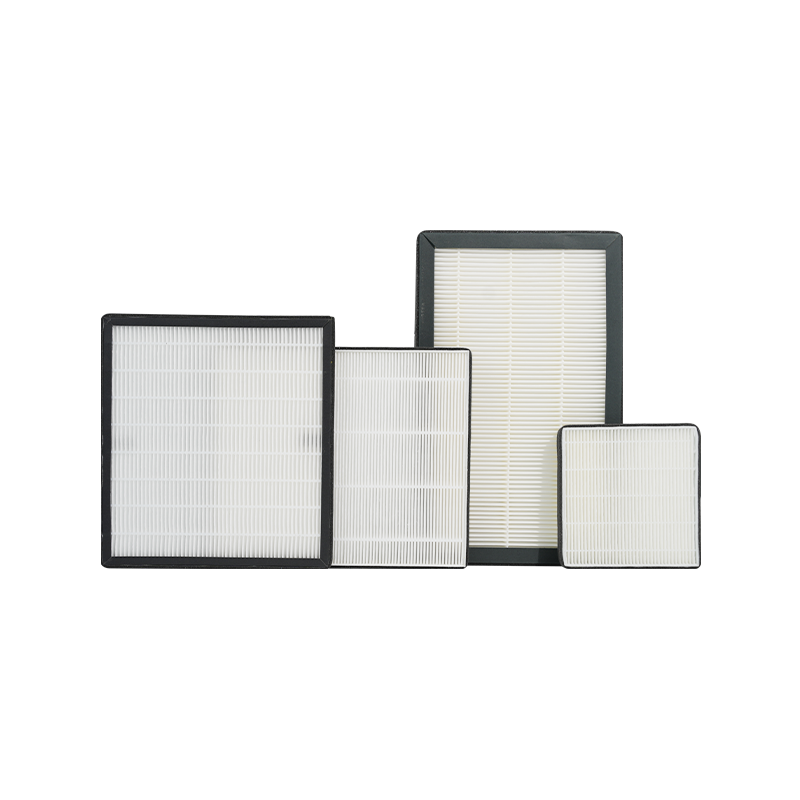
HEPA filters are composed of tightly packed fibers that create a tortuous path for air, which traps particles through mechanisms such as interception, impaction, and diffusion. Initially, when the filter is clean, air passes through relatively easily. As particles accumulate, the fibers begin to clog, decreasing the available cross-sectional area for airflow. This is the primary factor that drives the increase in pressure drop over time. It is important for maintenance personnel to monitor this metric, as exceeding the recommended pressure drop can compromise both system performance and filtration efficiency.
Key Points:
- Pressure drop is a measure of airflow resistance.
- HEPA fiber density and particle capture mechanisms influence initial pressure drop.
- Monitoring differential pressure is critical for timely filter replacement.
Accumulation of Particles (Dust Loading)
Mechanism of Dust Loading
HEPA filters trap fine and ultrafine particles from air streams. Over time, airborne dust, pollen, soot, and other contaminants begin to accumulate on and between the filter fibers. This particle buildup reduces the effective pore space, increasing airflow resistance. The process is gradual at first, but as more particles lodge within the fibers, the pressure drop can rise sharply. Dust loading is therefore considered the most significant factor affecting HEPA filter performance over time.
Stages of Dust Accumulation
- Initial stage: The filter is clean, and airflow is unobstructed, resulting in minimal pressure drop.
2. Intermediate stage: Some particles begin to collect, partially blocking fibers and moderately increasing pressure drop.
3. Advanced stage: Heavy particle buildup significantly obstructs airflow, sharply increasing pressure drop. Industrial facilities often schedule filter replacement or cleaning based on reaching a predefined differential pressure threshold.
Practical Considerations
Regular inspection and monitoring of the differential pressure gauge help determine the optimal time for filter replacement. Using pre-filters upstream can extend HEPA filter life by capturing larger particles before they reach the fine media.
Humidity and Moisture Effects
Impact of Moisture on Pressure Drop
High humidity or the presence of moisture in the air can accelerate the increase in pressure drop. Moisture causes particles to stick more firmly to fibers and can lead to fiber swelling or partial collapse. In industrial settings, HEPA filters in humid air streams or near steam processes experience faster increases in resistance compared to dry environments.
Mechanisms of Moisture-Induced Resistance
Water vapor can condense on fiber surfaces, creating localized wet spots. Particles captured on these wet fibers adhere more strongly, reducing the effective pore size and increasing the pressure drop. Additionally, some hydrophilic fiber materials may absorb water, slightly changing fiber dimensions and further restricting airflow. This is why filters designed for high-temperature or humid environments often use specialized media that resists moisture-induced deformation.
Preventive Measures
- Use pre-filters to reduce particle load.
- Select HEPA media that resists moisture or is treated with hydrophobic coatings.
- Regularly monitor humidity levels in HVAC systems.
Chemical and Reactive Particles
Exposure to Chemicals
Industrial air streams may contain chemical vapors, fumes, or reactive particles. These substances can bond with filter fibers, forming sticky residues that obstruct airflow. Chemical fouling is especially common in metal processing, chemical manufacturing, and certain laboratory settings. It not only increases pressure drop but may also degrade filter efficiency over time.
Effects on HEPA Filter Media
When chemical reactions occur on the filter surface, fibers may become coated with sticky byproducts. This reduces the effective airflow channels and accelerates the pressure drop. In some cases, activated carbon or catalyst-coated HEPA filters are used to absorb or neutralize reactive chemicals before they damage the fine fibers.
Fiber Deformation and Aging
Long-Term Media Deformation
Even in the absence of dust or chemical fouling, HEPA fibers can deform over long-term operation. Continuous high airflow, elevated temperatures, or mechanical stress can alter the structure of fine fibers, narrowing airflow paths. This structural aging gradually increases the filter's resistance to airflow.
Signs of Fiber Aging
- Gradual rise in baseline differential pressure despite low particle load.
- Reduced filter efficiency due to uneven fiber spacing.
- Potential physical fiber damage if operating beyond recommended conditions.
Causes of Pressure Drop Increase in HEPA Filters
|
Cause |
Mechanism |
Effect on Pressure Drop |
|
Particle Accumulation |
Dust and aerosols clog fiber pores |
Gradual then sharp increase over time |
|
High Humidity/Moisture |
Water causes fibers to swell or collapse; sticky adhesion |
Accelerates pressure drop rise |
|
Chemical Fouling |
Reactive gases or vapors bond with fibers |
Moderate to rapid increase depending on chemical load |
|
Fiber Deformation/Aging |
Heat, airflow, mechanical stress alter fiber structure |
Slow, steady increase even without particle load |
Pressure drop in HEPA filters is a natural consequence of particle capture, environmental conditions, chemical exposure, and media aging. Monitoring differential pressure, controlling humidity, using pre-filters, and selecting chemically resistant and high-temperature media can help maintain optimal performance. Understanding these factors allows operators to schedule timely maintenance, optimize energy efficiency, and ensure long-term air filtration reliability in both industrial and cleanroom environments.
FAQ
- Q:What temperature can HEPA filters operate at safely?
A: Most industrial HEPA filters operate up to 250–300°C for high-temperature media, but always check manufacturer specifications. - Q:Can moisture cause permanent damage to HEPA filters?
A: Yes, excessive moisture can swell fibers, reduce airflow, and shorten filter lifespan. - Q:How often should HEPA filters be replaced?
A: Replacement depends on differential pressure, particle load, and environmental conditions, typically every 6–12 months in industrial settings. - Q:Can chemical-laden air streams damage HEPA filters?
A: Yes, reactive chemicals can foul fibers; specialized media or pre-treatment is recommended.