 English
 Español
 日本語

What Is a Photocatalyst Filter?
A photocatalyst filter is an air-treatment component that uses light and a catalytic coating to break down airborne pollutants at the molecular level. Instead of simply trapping particles the way a mesh or fibrous filter does, it triggers a chemical reaction on its surface. Gases such as formaldehyde, benzene, and other volatile organic compounds (VOCs) are converted into much simpler substances, mainly carbon dioxide and water vapor.
The most widely used catalyst is titanium dioxide (TiO₂), a stable, non-toxic mineral compound that is also found in everyday products such as paints, toothpaste, and sunscreen. When titanium dioxide is coated onto a filter substrate and exposed to ultraviolet (UV-A) light, it becomes highly reactive. The catalyst itself is not consumed during this process. That is why the technology is called "photocatalytic": light activates the catalyst, and the catalyst drives the reaction.
The Basic Building Blocks
Most photocatalyst filters share the same core components:
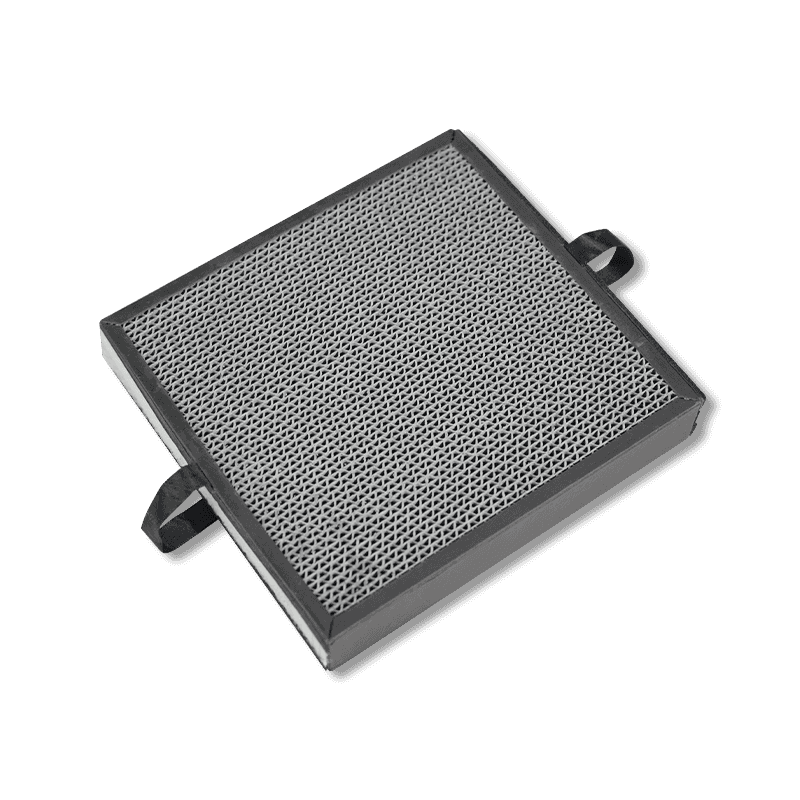
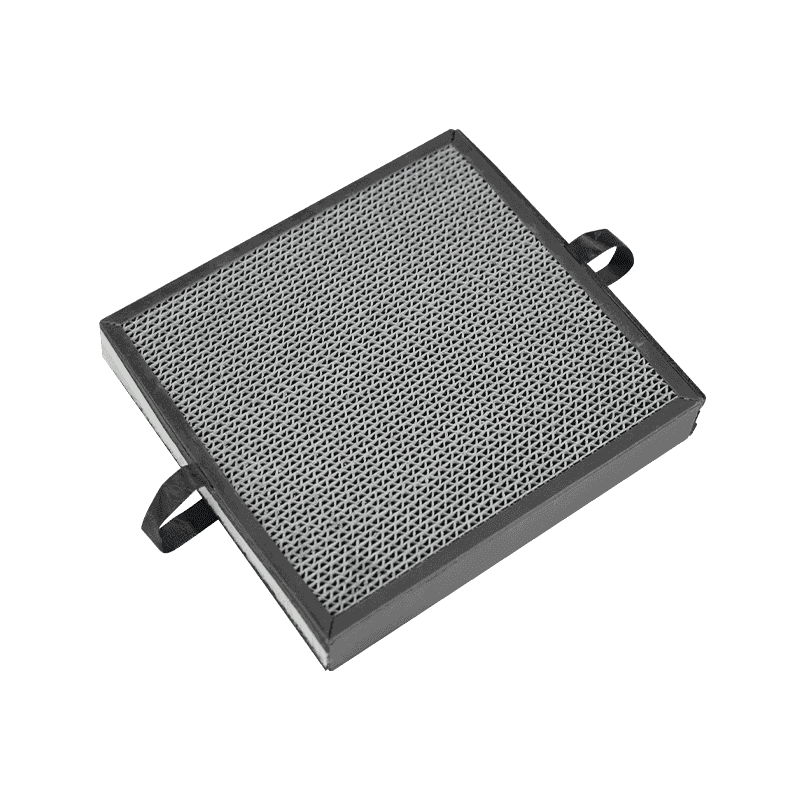
- A support structuresuch as a honeycomb, foam, or mesh, which provides a large surface area for the reaction.
- A photocatalytic coating, typically nano-sized titanium dioxide, sometimes combined with silver, platinum, or other co-catalysts to broaden performance.
- A light source, usually a UV-A LED or lamp, with a wavelength around 365 nm, which energizes the coating.
- An airflow system, usually a fan, that continuously moves room air across the activated surface.
A Short History of the Technology
Photocatalysis became widely known in 1972, when Japanese researchers Akira Fujishima and Kenichi Honda reported that titanium dioxide could split water under ultraviolet light. Over the following decades, scientists realized the same effect could break down organic pollutants. Today the technology is used in self-cleaning glass, antibacterial surface coatings, water treatment systems, and, increasingly, residential and commercial air purifiers.
How a Photocatalyst Filter Works Step by Step
The science behind a photocatalyst filter can sound complicated, but the process is easy to follow when it is broken into stages. Titanium dioxide in its anatase form has a band gap of about 3.2 electron volts, which means it absorbs UV light with a wavelength below roughly 387 nm. That is exactly the range delivered by UV-A light sources.
- Air is drawn in.A fan pulls room air through the unit and across the coated surface.
- UV light activates the coating.Photons strike the titanium dioxide and excite electrons, creating electron-hole pairs on the surface.
- Reactive species form.The excited surface reacts with moisture and oxygen in the air to produce hydroxyl radicals and superoxide ions, which are powerful oxidizing agents.
- Pollutant molecules are oxidized.When VOCs, odor molecules, and certain microorganisms touch the activated surface, the radicals break their chemical bonds.
- Cleaner air is released.The end products, mostly CO₂ and H₂O in trace amounts, leave with the airflow, and the catalyst is ready for the next cycle.
Why Destruction Beats Capture for Gaseous Pollutants
Gaseous pollutants are far smaller than dust or pollen. A formaldehyde molecule measures a fraction of a nanometer, while a standard particle filter targets particles in the range of 0.3 micrometers and above. Because of this size difference, particle filters cannot physically catch gas molecules. A photocatalyst filter addresses this gap by chemically transforming the gas instead of trying to trap it.
Which Indoor Pollutants Can a Photocatalyst Filter Address?
Photocatalytic oxidation has been studied extensively for a broad range of indoor air contaminants. The reaction is not limited to one compound, and that versatility is one of its biggest strengths. The table below summarizes the main categories of pollutants, common indoor sources, and how the technology interacts with them.
|
Common indoor pollutants and how photocatalytic oxidation interacts with them |
||
|
Pollutant |
Typical Indoor Sources |
Photocatalytic Result |
|
Formaldehyde |
New furniture, plywood, flooring, curtains |
Oxidized to CO₂ and water |
|
Benzene and toluene |
Paints, adhesives, cleaning products |
Decomposed into simpler compounds |
|
Cooking odors |
Frying, grilling, boiling |
Odor molecules broken down |
|
Pet odors |
Litter boxes, pet bedding |
Ammonia and organic odors reduced |
|
Tobacco smoke gases |
Smoking, smoke drifting in from outside |
Gaseous components oxidized |
|
Airborne bacteria and viruses |
Occupants, shared spaces |
Cell structures damaged by reactive radicals |
|
Mold spores |
Damp bathrooms, basements |
Organic material degraded on the catalyst surface |
Laboratory studies published in peer-reviewed journals have reported formaldehyde removal rates above 90% in controlled chamber conditions, depending on airflow, humidity, light intensity, and catalyst quality. Real-world performance varies with room conditions, so choosing a well-engineered unit matters.
Why Indoor Air Quality Deserves Your Attention
Most people think of air pollution as an outdoor problem, yet the air inside our homes and offices often carries a heavier chemical load. The U.S. Environmental Protection Agency reports that people spend roughly 90% of their time indoors, and that indoor concentrations of some pollutants can be two to five times higher than outdoor levels, and occasionally more than 100 times higher during activities such as painting or renovation.
Where Indoor Pollutants Come From
Modern buildings are designed to be energy efficient and airtight, which keeps heat in but also keeps pollutants in. Everyday sources include:
- Engineered wood furniture, cabinetry, and flooring that off-gas formaldehyde for months or even years after installation.
- Fresh paint, varnish, and adhesives that release benzene, toluene, and xylene.
- Household cleaners, air fresheners, and personal-care sprays that emit a wide mix of VOCs.
- Gas stoves and cooking, which release nitrogen dioxide, aldehydes, and odor compounds.
- Pets, bathrooms, and damp areas that contribute odors, microbes, and mold-related compounds.
Why It Matters for Daily Comfort
Elevated VOC levels are associated with headaches, eye and throat irritation, and fatigue. The World Health Organization has set an indoor guideline for formaldehyde of 0.1 mg/m³ over a 30-minute period, a level many newly furnished or renovated rooms can approach. Keeping gaseous pollutants low is a practical way to make a living space feel fresher, more comfortable, and healthier for children, older adults, and anyone sensitive to odors.
Why You Need a Photocatalyst Filter: Key Benefits
A photocatalyst filter fills a specific and important role in a complete air-cleaning strategy. Here are the main reasons households and businesses choose it.
It Breaks Down Gases That Other Filters Cannot Catch
Formaldehyde and other VOCs pass straight through particle filters. A photocatalyst filter is designed for exactly these molecules, which makes it a valuable partner for any home that has new furniture, a recent renovation, or a lot of cooking.
It Works Continuously Without Consuming the Catalyst
Because titanium dioxide acts as a catalyst, it is not used up in the reaction. As long as light, air, and moisture are present, the surface keeps working. This gives the filter a long functional life, often measured in years rather than weeks, depending on the design and the pollution level of the room.
It Eliminates Odors at the Source
Many odors, from kitchen smells to pet areas, come from organic molecules. Instead of masking them with fragrance, photocatalytic oxidation changes the molecules themselves, so the air smells neutral rather than perfumed.
It Supports Microbial Control
The hydroxyl radicals produced on the catalyst surface can damage the cell walls of bacteria and the protective coatings of some viruses and mold spores. Research on titanium dioxide surfaces has shown antibacterial activity against common organisms such as E. coli and Staphylococcus aureus under UV illumination.
It Pairs Well With Other Filtration Layers
A photocatalyst stage is most effective when combined with a HEPA filter for particles and, in many designs, an activated carbon layer for pre-adsorbing gases. Together, they cover dust, allergens, smoke particles, gases, and odors in a single unit.
Photocatalyst Filter vs. HEPA, Activated Carbon, and UV-C
Each air-cleaning technology has a distinct strength. Understanding the differences helps you see where a photocatalyst filter fits. A true HEPA filter captures 99.97% of particles at 0.3 micrometers, which makes it the standard for dust, pollen, and pet dander. Activated carbon adsorbs many gases and odors through its porous structure. UV-C lamps inactivate microorganisms through direct light exposure. Photocatalytic oxidation contributes something different: chemical destruction of gaseous pollutants.
|
Comparison of the main air-cleaning technologies and their primary strengths |
|||
|
Technology |
Main Target |
How It Works |
Best Role |
|
HEPA filter |
Dust, pollen, dander, PM2.5 |
Physical capture in dense fiber mesh |
Particle removal |
|
Activated carbon |
Odors and some gases |
Adsorption into porous granules |
Odor and gas pre-treatment |
|
UV-C light |
Bacteria, viruses |
Direct DNA/RNA disruption |
Microbial inactivation |
|
Photocatalyst filter |
Formaldehyde, VOCs, odors, microbes |
Light-activated catalytic oxidation |
Chemical decomposition of gases |
The takeaway is simple: these technologies complement one another. A multi-stage purifier that includes a photocatalyst filter alongside HEPA and carbon layers gives the most complete coverage across particles, gases, and microbes.
Where a Photocatalyst Filter Makes the Biggest Difference
While any enclosed space can benefit, some environments see especially noticeable improvements because of their pollutant profile.
Newly Renovated or Newly Furnished Homes
Fresh paint, new cabinets, and new flooring release the highest levels of formaldehyde and VOCs in the first few months. Running a photocatalyst-equipped purifier during this period helps keep gaseous pollutants under control while the materials finish off-gassing.
Nurseries and Children's Bedrooms
New cribs, mattresses, and toys can add to the chemical load of a small room. Because children breathe more air relative to their body weight than adults, keeping the nursery air clean is a sensible priority.
Kitchens and Open-Plan Living Areas
Cooking generates a mix of aldehydes, fumes, and strong smells that drift into nearby rooms. A photocatalyst filter helps reduce lingering odors so the home feels fresh after meals.
Homes With Pets
Pet odors are largely gaseous, which makes them a good match for catalytic oxidation. Combined with HEPA filtration for dander, the result is cleaner and more neutral-smelling air.
Offices, Clinics, and Shared Spaces
Spaces with many occupants face a constant mix of odors, carbon-based compounds from printers and cleaning products, and airborne microbes. A photocatalyst stage adds a layer of treatment that supports a more comfortable working environment.
What to Look for When Choosing a Photocatalyst Filter
Not every photocatalyst filter is built the same way. The quality of the coating, the light source, and the airflow design all influence how well the unit performs. Use the checklist below to compare options with confidence.
Catalyst Quality and Coating Technique
Look for nano-structured titanium dioxide that is evenly and firmly bonded to the substrate. A uniform coating maximizes the active surface area and ensures consistent reactions across the whole filter. Some advanced designs add silver or platinum co-catalysts to improve efficiency.
Light Source and Wavelength
Titanium dioxide responds best to UV-A light around 365 nm. Sealed UV-A LEDs are a popular choice because they are compact, energy efficient, and long lasting, with typical rated lifespans of 10,000 hours or more.
Clean Air Delivery Rate and Room Size
Check the unit's clean air delivery rate (CADR) or recommended room coverage. As a rule of thumb, a purifier should be able to cycle the air in your room four to five times per hour. A 20 m² room with a 2.5 m ceiling holds 50 m³ of air, so an airflow of roughly 200 to 250 m³/h is a good target.
Multi-Stage Design
A photocatalyst filter works best as part of a layered system. Look for models that include a pre-filter, a HEPA filter, and an activated carbon layer in addition to the photocatalyst stage.
Certifications and Test Reports
Reliable manufacturers provide third-party test data for formaldehyde, VOC, and microbial performance. Certifications from recognized bodies, along with clear safety documentation, are a good sign of a well-engineered product.
|
A quick buying checklist for evaluating photocatalyst air purifiers |
||
|
Feature |
What to Look For |
Why It Matters |
|
Catalyst |
Nano TiO₂, uniform coating |
Larger active surface, consistent reaction |
|
Light source |
UV-A, about 365 nm, sealed LED |
Matches the catalyst's activation range |
|
Airflow |
4 to 5 air changes per hour |
Ensures all room air reaches the catalyst |
|
Filter layers |
Pre-filter, HEPA, carbon, photocatalyst |
Covers particles, gases, odors, and microbes |
|
Test data |
Independent lab reports |
Verifies real performance claims |
Placement and Daily Use Tips for Better Results
Even the best photocatalyst filter performs better when it is used thoughtfully. These simple habits help you get the most from your purifier.
- Leave space around the unit.Keep at least 30 cm (about 12 inches) of clearance on all sides so air can flow freely.
- Place it near the source.In a new bedroom set, position the purifier close to the furniture. In a kitchen, place it near the cooking zone.
- Run it continuously during high-emission periods.After painting or installing furniture, 24-hour operation helps keep VOC levels down.
- Keep doors and windows mostly closed while it runs.This lets the purifier focus on the room's air rather than constantly treating incoming air.
- Combine with ventilation.Opening windows for short periods when outdoor air is clean helps flush pollutants, and the purifier keeps levels low afterward.
- Maintain moderate humidity.A relative humidity of around 40% to 60% supports the formation of hydroxyl radicals on the catalyst surface and keeps the room comfortable.
Simple Maintenance to Keep Performance High
One of the advantages of a photocatalyst filter is its low-effort upkeep. A few routine steps keep the unit working at its best for years.
- Clean the pre-filter every two to four weeks.Vacuum or rinse it gently so dust does not block the airflow.
- Wipe the photocatalyst surface as the manual recommends.A soft, dry brush or cloth removes surface dust so light and air reach the coating.
- Replace the HEPA and carbon layers on schedule.These are typically replaced every 6 to 12 months depending on usage and air quality.
- Check the UV light.Quality UV-A LEDs can run for 10,000 hours or more, which is more than a year of continuous operation, and the unit's indicator will tell you when service is due.
- Keep a simple log.Note filter change dates on a calendar so you never miss a scheduled replacement.
Frequently Asked Questions About Photocatalyst Filters
Is a photocatalyst filter safe to use at home?
Well-designed units enclose the UV-A light source inside the housing, so no light reaches the room. Titanium dioxide is a stable, widely used material, and the end products of the reaction are carbon dioxide and water vapor. As with any electrical appliance, choose a unit with proper safety certifications and follow the manufacturer's instructions.
Does a photocatalyst filter replace a HEPA filter?
No, and it is not meant to. HEPA handles particles; the photocatalyst filter handles gases and odors. The two technologies are designed to work side by side, and the best purifiers include both.
How long does it take to notice a difference?
Odor improvements are often noticeable within the first few hours of operation in a closed room. For formaldehyde and VOCs from new furniture, steady daily operation over one to four weeks typically brings levels down progressively, especially when combined with regular ventilation.
Can it work in a bedroom while I sleep?
Yes. Many models offer a quiet night mode, with noise levels as low as 20 to 30 decibels, similar to a whisper. Running the purifier overnight keeps the air fresh while you rest.
Is the technology useful outside the home?
Absolutely. Photocatalytic technology is used in vehicles, offices, hospitals, schools, and hotels. In cars, for example, new interior materials can off-gas VOCs in a small, sealed cabin, which makes compact photocatalyst filters a popular upgrade.