 English
 Español
 日本語

HEPA Captures Particles, Formaldehyde Filters Handle Gas
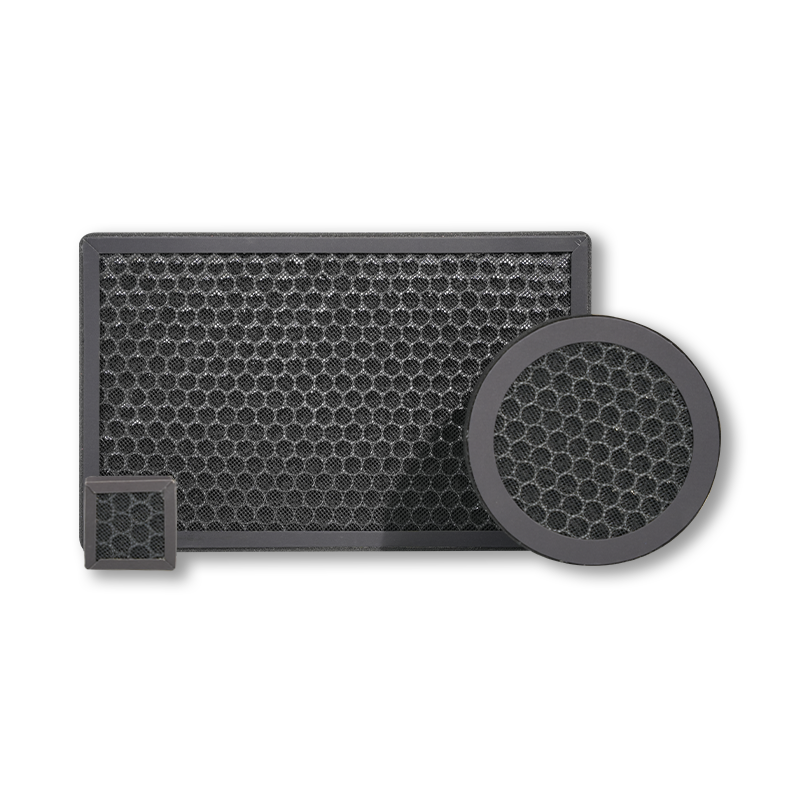
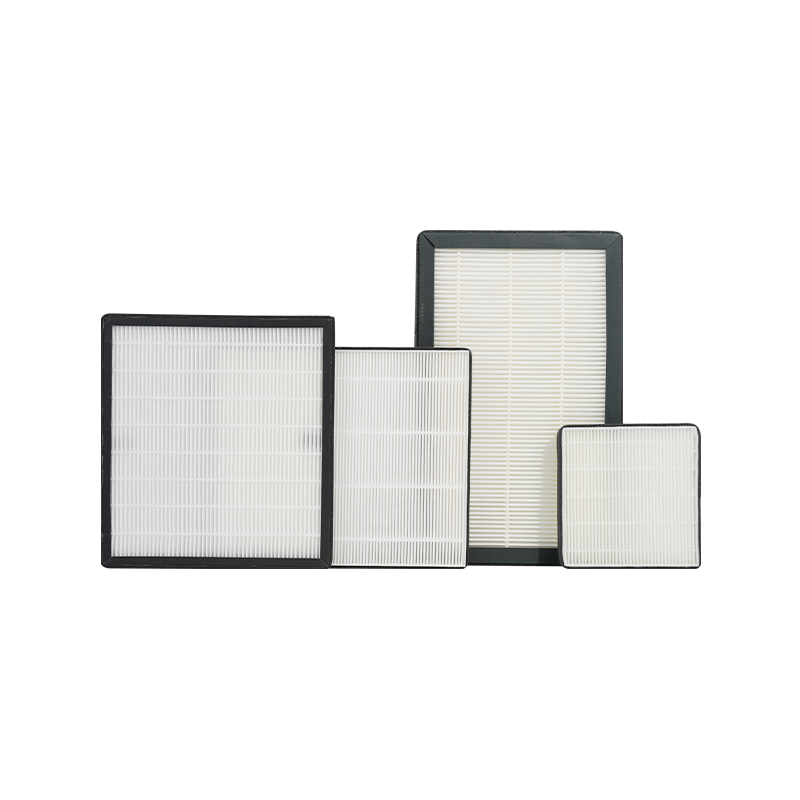
If you are comparing a HEPA filter with a formaldehyde filter, the most useful thing to know is that they are built for two different types of indoor air pollution. A HEPA filter is a dense mesh of glass or synthetic fibers designed to trap solid and liquid particles such as dust, pollen, pet dander, mold spores and smoke. A formaldehyde filter is a chemically active or catalytic media designed to capture or break down gas-phase molecules, especially formaldehyde (HCHO) released by furniture, flooring and paint.
Think of it this way: HEPA is like a very fine sieve, while a formaldehyde filter is like a sponge with a built-in chemical reaction. The sieve is perfect for things you can catch by size. The sponge is perfect for molecules that travel freely through the air as an invisible gas. Together, they cover the two main categories of indoor pollutants that affect comfort and health.
The table below gives you a quick overview before we go into more detail.
|
Quick comparison of HEPA filters and formaldehyde filters |
||
|
Feature |
HEPA Filter |
Formaldehyde Filter |
|
Target pollutant |
Particles (PM2.5, dust, pollen, dander) |
Gases (formaldehyde, some VOCs) |
|
Working principle |
Physical filtration |
Adsorption, chemical reaction or catalysis |
|
Typical material |
Glass fiber or PP melt-blown fiber |
Impregnated activated carbon, catalyst-coated media |
|
Key rating |
Efficiency at 0.3 µm (e.g. 99.97%) |
Gas CADR and CCM |
How a HEPA Filter Works
HEPA stands for High-Efficiency Particulate Air. In the United States, a "True HEPA" filter must remove at least 99.97% of particles measuring 0.3 microns. In Europe, the EN 1822 standard classifies filters such as H13 (at least 99.95% at the most penetrating particle size) and H14 (at least 99.995%). For comparison, a human hair is roughly 50 to 70 microns wide, so a 0.3 micron particle is around 200 times thinner.
Four capture mechanisms
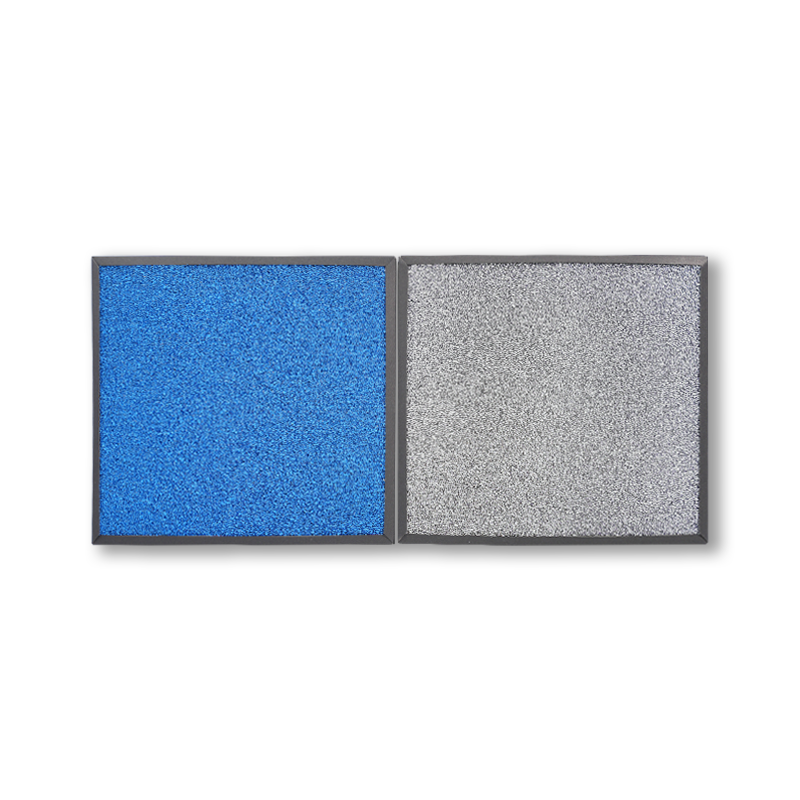
A HEPA filter does not work like a simple net. Its randomly arranged fibers capture particles through four mechanisms working at once:
- Impaction:larger particles cannot follow the curving airflow and hit a fiber directly.
- Interception:mid-sized particles follow the airflow but touch a fiber as they pass and stick to it.
- Diffusion:very small particles move erratically (Brownian motion) and collide with fibers.
- Electrostatic attraction:some media carry a charge that helps pull particles onto the fibers.
What HEPA is best at
HEPA excels at removing anything that exists as a particle in indoor air. That includes PM2.5 from cooking and outdoor smog, wildfire smoke, pollen (typically 10 to 100 microns), dust mite allergens (roughly 10 to 40 microns), pet dander, mold spores (about 3 to 40 microns) and many bacteria (0.3 to 10 microns). For households with allergies, asthma or pets, a well-sealed HEPA filter is the foundation of good air cleaning.
How a Formaldehyde Filter Works
Formaldehyde is a colorless gas with a boiling point of about -19 °C, so at room temperature it exists as free molecules rather than particles. To remove it, a filter needs chemistry rather than mesh size. Most "formaldehyde filters" in consumer air purifiers rely on one or more of the following technologies.
Chemically impregnated activated carbon
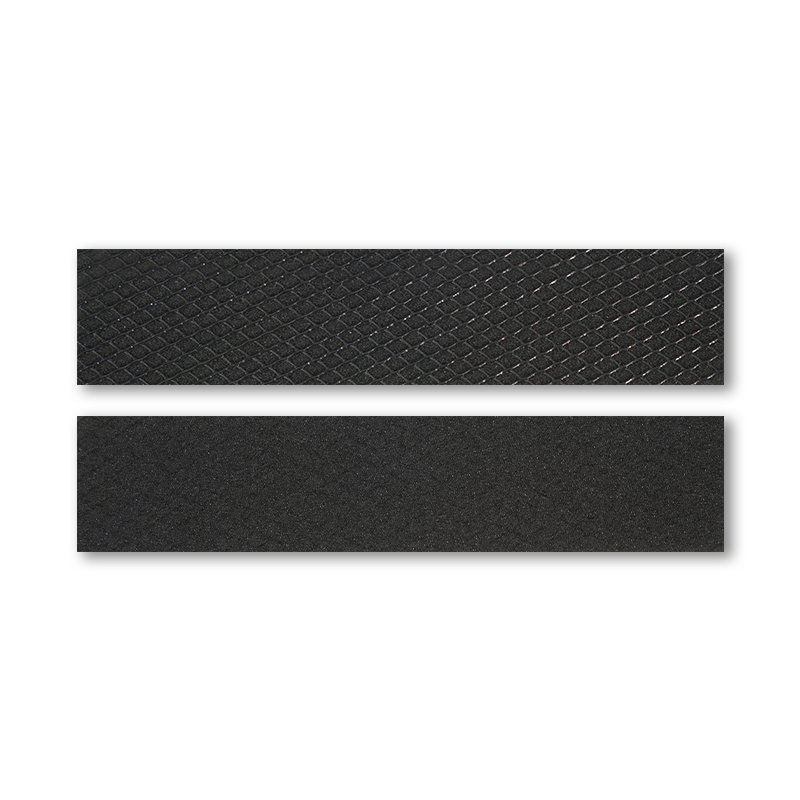
Activated carbon has an enormous internal surface area, often 500 to 1,500 square meters per gram. When the carbon is treated with specific compounds, such as amine-based agents, formaldehyde molecules that land on the surface react and are bound as stable substances. This chemical step is what makes the filter specialized for formaldehyde rather than general odor control.
Catalytic decomposition
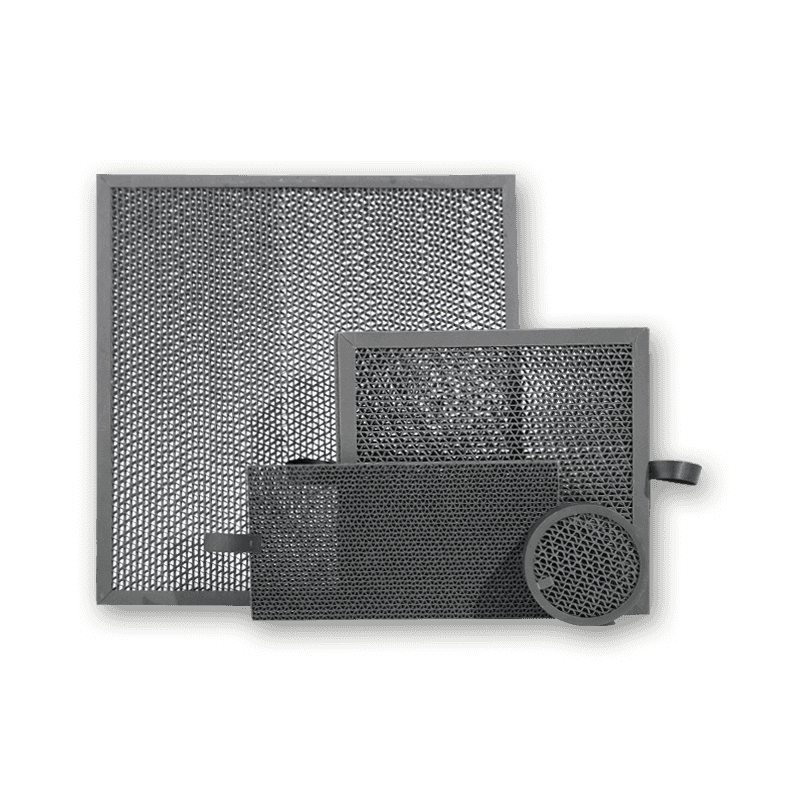
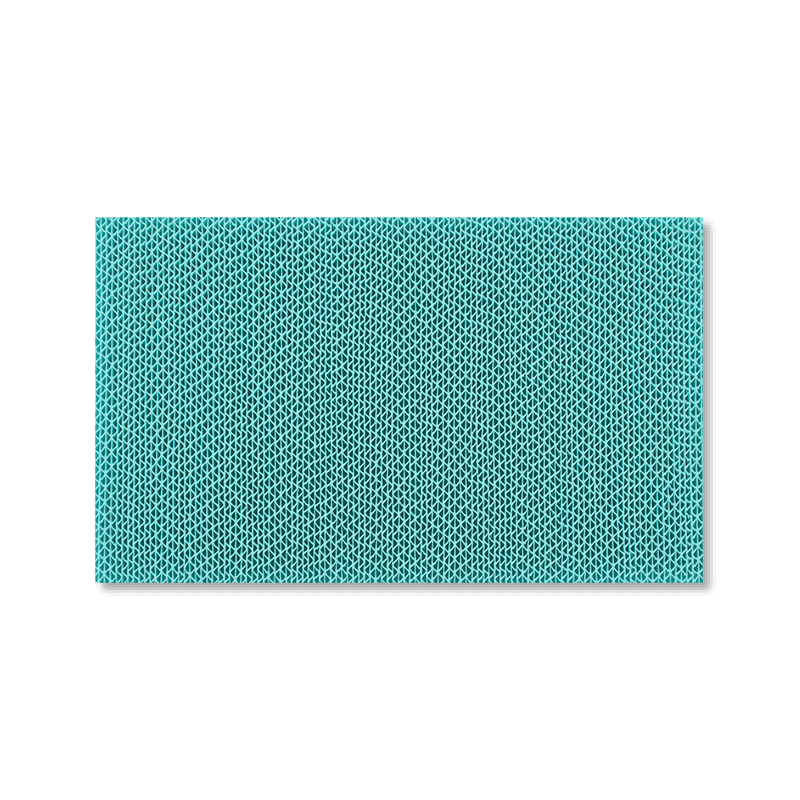
Catalyst-based media, often using manganese oxides or noble metals, help convert formaldehyde into carbon dioxide and water at room temperature. Because the pollutant is transformed rather than only stored, catalytic media can maintain performance over a longer working period.
Specialized coatings and composite media
Some purifiers combine several technologies in one layered filter, for example a catalyst coating on a honeycomb structure followed by an impregnated carbon bed. These composite designs aim to give the formaldehyde molecules more contact time and more reaction sites as air passes through.
Why Size Matters: Particles Versus Molecules
The clearest way to understand the difference is to compare the size of what each filter is designed to handle. A formaldehyde molecule has a kinetic diameter of roughly 0.0004 microns (0.4 nanometers). A HEPA test particle is 0.3 microns, which is hundreds of times larger. Because of this difference, the two filter types are engineered around completely different physics.
|
Approximate size of common indoor pollutants and the filter type designed for them |
|||
|
Pollutant |
Approx. Size |
Form |
Designed-for Filter |
|
Pollen |
10–100 µm |
Particle |
HEPA |
|
Dust mite allergen |
10–40 µm |
Particle |
HEPA |
|
PM2.5 |
≤ 2.5 µm |
Particle |
HEPA |
|
Smoke particles |
0.01–1 µm |
Particle |
HEPA |
|
Formaldehyde |
~0.0004 µm |
Gas molecule |
Formaldehyde filter |
|
Benzene, toluene (VOCs) |
~0.0005–0.0006 µm |
Gas molecule |
Carbon / VOC filter |
In short, HEPA is the right tool for anything you could theoretically see under a microscope as a particle, and a formaldehyde filter is the right tool for gas molecules that need to be chemically captured or converted.
Where Formaldehyde Comes From and Why It Deserves Attention
Formaldehyde is one of the most common indoor air chemicals. The International Agency for Research on Cancer (IARC) classifies it as a Group 1 human carcinogen, and even at low levels it can cause eye, nose and throat irritation. The World Health Organization recommends a 30-minute average limit of 0.1 mg/m³, and China's indoor air quality standard GB/T 18883 sets a limit of 0.08 mg/m³ for a one-hour average.
Common household sources
- Composite wood products such as particleboard, MDF and plywood used in cabinets, wardrobes and desks
- New laminate or engineered wood flooring and the adhesives used to install it
- Paints, wall coverings and sealants
- Curtains, carpets and some upholstered furniture treated with resins
- Combustion sources such as cigarettes, incense and gas cooking
Why levels vary over time
Formaldehyde release from building materials is called off-gassing. It tends to be highest in the first months after installation and rises with higher temperature and humidity. Research on emission rates shows that a temperature increase of about 10 °C can noticeably raise release from composite wood panels. This is why many people notice a stronger smell in summer or in a closed room after a renovation, and it is the main reason a dedicated formaldehyde filter is popular in new homes, nurseries and newly furnished offices.
HEPA vs. Formaldehyde Filter: Side-by-Side Comparison
Now that each technology is clear, the following table compares them across the factors that matter most when you choose an air purifier.
|
Detailed comparison of HEPA and formaldehyde filter characteristics (typical values; actual figures vary by brand and use) |
||
|
Category |
HEPA Filter |
Formaldehyde Filter |
|
Primary purpose |
Allergy, dust, smoke and PM2.5 reduction |
Reducing formaldehyde after renovation or new furniture |
|
Performance standard |
99.97% at 0.3 µm (True HEPA); EN 1822 H13/H14 |
Gas CADR and CCM (e.g. GB/T 18801 in China) |
|
Typical replacement interval |
6–12 months in most homes |
3–6 months during heavy off-gassing periods |
|
How it handles pollutant |
Holds particles in the fiber layers |
Binds or converts molecules on its surface |
|
Best use case |
Bedrooms, allergy homes, pet households, wildfire areas |
Newly decorated rooms, nurseries, new offices |
|
Pairs well with |
Activated carbon, pre-filter |
HEPA filter, ventilation |
The key takeaway is that the two filters complement each other rather than compete. Each one covers a distinct part of the indoor pollution picture.
Which Pollutants Each Filter Is Designed to Address
Matching your actual concern to the right filter is the fastest way to get value from an air purifier. The table below maps common household situations to the filter technology that fits best.
|
Matching common indoor air concerns with the most suitable filter |
||
|
Situation |
Main Pollutant |
Recommended Filter |
|
Seasonal allergies |
Pollen, dust |
HEPA |
|
Living with cats or dogs |
Dander, hair, odor |
HEPA + activated carbon |
|
Wildfire smoke or heavy smog |
PM2.5, smoke |
HEPA (H13 or higher) |
|
New furniture or fresh paint |
Formaldehyde, VOCs |
Formaldehyde filter |
|
Newly renovated apartment |
Formaldehyde + construction dust |
Formaldehyde filter + HEPA |
|
Baby or nursery room |
Particles + off-gassing from new items |
HEPA + formaldehyde filter |
When You Need HEPA, a Formaldehyde Filter, or Both
Choose HEPA first if particles are your main concern
If your home is older, your furniture has been in place for years, and your main issues are sneezing, dusty surfaces or outdoor pollution, a HEPA purifier is the most direct solution. Formaldehyde release from long-installed furniture typically declines over time, so particle control becomes the priority.
Add a formaldehyde filter after renovation or furniture purchases
In the first 3 to 12 months after renovation, off-gassing from panels, adhesives and paint is usually at its strongest. In that period, a purifier with a dedicated formaldehyde filter gives you a way to keep indoor concentrations lower while you also ventilate. Construction dust is also common at that time, so a HEPA layer in the same machine is helpful.
Use both for the most complete coverage
Most real homes face particles and gases at the same time: cooking creates PM2.5 and VOCs, new mattresses release chemicals while dust circulates, and nurseries combine new products with a need for very clean air. A purifier that includes both a HEPA filter and a formaldehyde-specific filter handles both pollutant categories in a single pass of air.
How to Choose an Air Purifier with Both Filter Types
Not every purifier with a "formaldehyde" label is the same. Use this checklist to compare models:
- Look for a particle CADR rating.The Clean Air Delivery Rate shows how many cubic meters (or cubic feet) of clean air per hour the unit produces. Higher CADR means faster cleaning.
- Look for a separate gas or formaldehyde CADR.A product that publishes a formaldehyde-specific CADR and CCM (cumulative clean mass) gives you a measurable way to compare performance.
- Check the HEPA grade.H13 (99.95%) is a strong choice for homes; H14 (99.995%) is useful for sensitive users.
- Check the media details.Brands that explain whether the formaldehyde layer is impregnated carbon, catalytic or composite are being transparent about the technology.
- Confirm room coverage.Match the rated area to your room size, ideally with a margin of safety.
- Check noise levels.Aim for around 35 dB or lower on the lowest speed for bedrooms.
- Review replacement cost and availability.Filters are a recurring expense, so confirm they are easy to buy.
Sizing Your Purifier: A Practical Example
The best filter will not help if the purifier is too small for the room. A reliable approach is to calculate air changes per hour (ACH). For allergy relief and general cleaning, 4 to 6 ACH is a common target.
Worked example
- Room size: 20 m² with a 2.7 m ceiling gives a volume of 54 m³.
- Target: 5 ACH, so required CADR = 54 × 5 = 270 m³/h.
- A purifier with a 400 m³/h particle CADR would deliver about 4 ACHin this room, leaving comfortable headroom to run on a quieter setting.
Apply the same logic to the gas CADR where it is published. If the purifier lists a formaldehyde CADR of 150 m³/h, it will cycle the room's air through the gas-phase media about 2.8 times per hour in the example above. Higher gas CADR values mean quicker reduction in a freshly furnished room.
|
Estimated particle CADR needed for a 5 ACH target (2.7 m ceiling) |
||
|
Room Area |
Room Volume |
Suggested CADR (5 ACH) |
|
10 m² |
27 m³ |
≈ 135 m³/h |
|
20 m² |
54 m³ |
≈ 270 m³/h |
|
30 m² |
81 m³ |
≈ 405 m³/h |
|
45 m² |
121.5 m³ |
≈ 608 m³/h |
Maintenance and Replacement Schedule
Good maintenance keeps both filters performing at their best. Because they work differently, they follow different care routines.
HEPA filter care
- Clean or replace the pre-filter every 2 to 4 weeksto protect the HEPA layer from large dust.
- Replace the HEPA filter roughly every 6 to 12 months, or sooner in homes with pets, smokers or heavy outdoor pollution.
- Do not wash a standard HEPA filter, since water can damage the fiber structure.
Formaldehyde filter care
- Replace it every 3 to 6 monthsduring the high off-gassing period after renovation, then extend the interval as levels settle.
- Use the purifier's filter-life indicator or app reminder where available.
- Store spare filters in their sealed packaging so the media stays fresh until installation.
A simple habit is to set a calendar reminder at the time of purchase. Following the schedule helps maintain the rated CADR performance throughout the life of the purifier.
Practical Tips to Lower Formaldehyde Beyond Filtration
An air purifier works best as part of a complete plan. These habits make a measurable difference and help your formaldehyde filter work on a lower pollutant load.
- Ventilate daily.Open windows for 20 to 30 minutes, ideally creating cross-ventilation, especially in the morning when outdoor temperature is lower.
- Choose low-emission materials.Look for products labeled E0, E1 (Europe), CARB Phase 2 or TSCA Title VI compliant (US) when buying panels and furniture.
- Allow new furniture to air out.If possible, let large items off-gas in a ventilated space before moving them into a bedroom.
- Control temperature and humidity.Keeping indoor humidity around 40% to 60% and avoiding excessive heat can help reduce emission rates.
- Place the purifier well.Keep it 30 cm or more away from walls and place it near the main source, such as a new wardrobe.
- Run it continuously during the first months.Steady operation keeps concentrations lower than running it only for short periods.
- Test when in doubt.A formaldehyde meter or a lab test kit gives you actual readings so you can see how levels change.
Frequently Asked Questions
Is a HEPA filter the same as a formaldehyde filter?
No. A HEPA filter is a physical particle filter, while a formaldehyde filter uses adsorption, chemical reaction or catalysis to deal with gas molecules. They are designed for different pollutant types and are often combined in one purifier for complete coverage.
Is activated carbon the same as a formaldehyde filter?
Standard activated carbon is excellent for many odors and larger VOC molecules. A dedicated formaldehyde filter usually adds a chemical treatment or catalyst so that small, volatile formaldehyde molecules are captured and held more effectively.
Do I need a formaldehyde filter if my home is not new?
If your furniture and flooring have been in place for several years, emissions are typically much lower, and a HEPA purifier with a carbon layer may be enough. A formaldehyde filter becomes most valuable after renovation, new furniture or new mattress purchases.
Can one purifier do both jobs?
Yes. Many modern purifiers stack a pre-filter, a HEPA filter, an activated carbon layer and a formaldehyde-specific layer. Check the published particle CADR and gas CADR to confirm the unit is sized for your room.
How long should I run the purifier each day?
For the best results, run it 24 hours a day on a low or auto setting, especially in a newly furnished room. Continuous operation keeps pollutant levels steady rather than letting them build up.