 English
 Español
 日本語
日本語
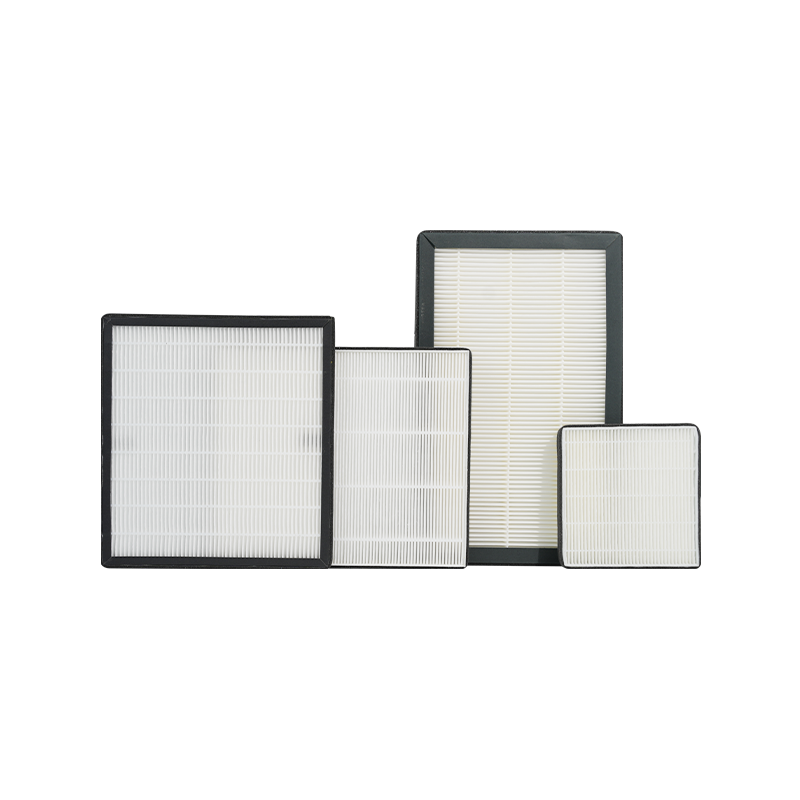
The standard certification threshold — 99.97% efficiency at 0.3 microns — is deliberately set at the most penetrating particle size (MPPS), meaning real-world performance for both larger and smaller particles is typically even better.
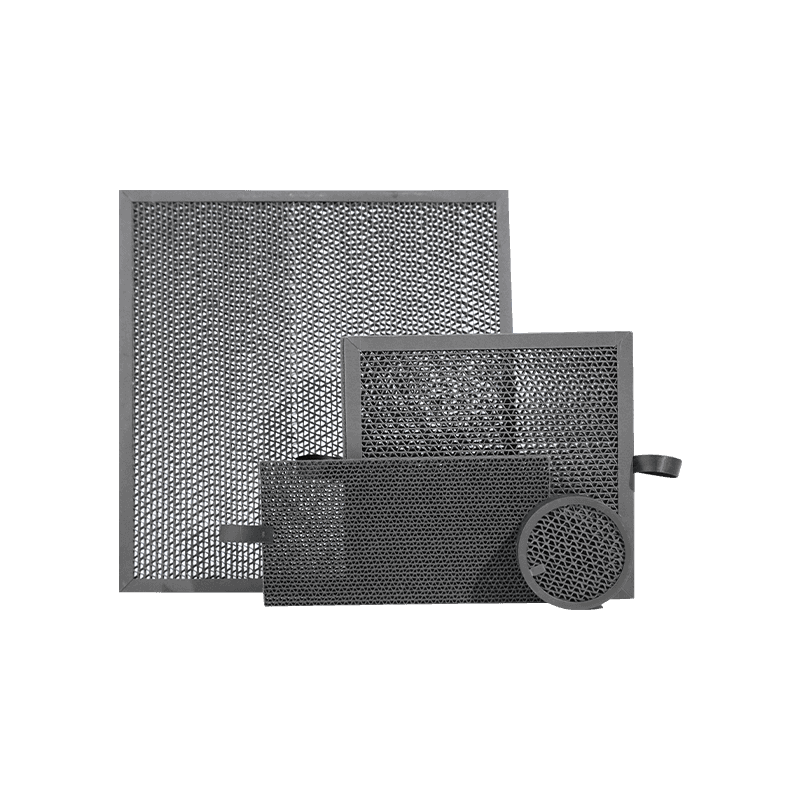
Activated Carbon Filter Mechanism
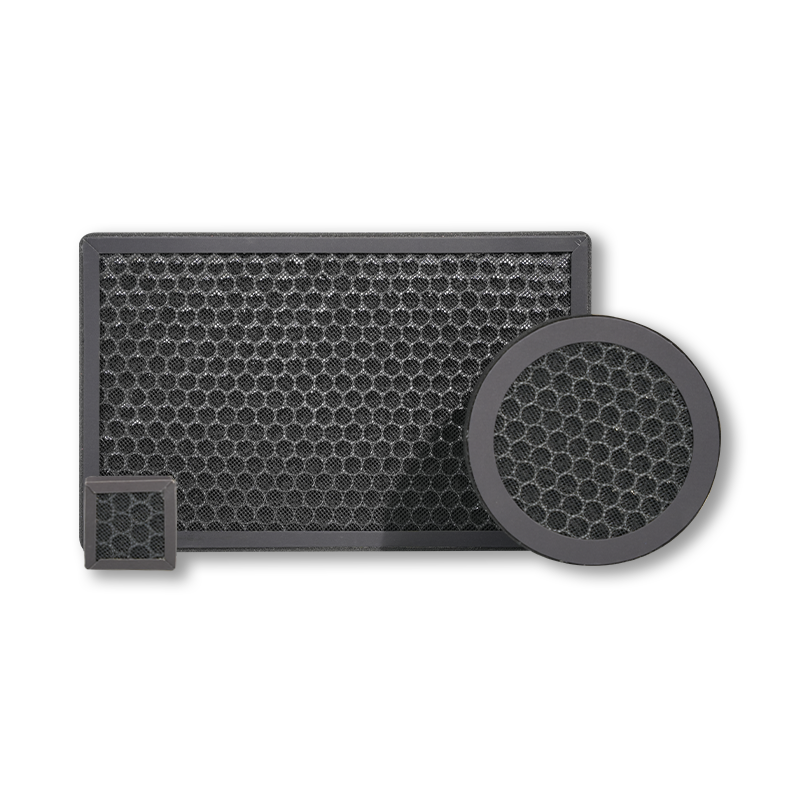
Activated carbon works through a process called adsorption (not absorption). Raw carbon — usually derived from coconut shells, coal, or wood — is treated with oxygen at very high temperatures (600–900°C), which opens up millions of tiny internal pores. This creates an extraordinarily large internal surface area: a single gram of activated carbon can have a surface area exceeding 500 to 1,500 square meters.
When air passes through the carbon bed, gas molecules and odor compounds are drawn into these micropores by Van der Waals forces and held there. The carbon does not chemically transform the molecules — it traps them physically. This is why activated carbon is highly effective against:
- VOCs such as benzene, toluene, xylene, and formaldehyde
- Household odors (cooking, pets, tobacco)
- Chlorine and chloramine gases
- Some pesticides and industrial chemicals
However, once all the pores are saturated, the carbon filter loses effectiveness — and in some conditions can even re-release trapped compounds back into the air. This is why carbon filters require regular replacement on a fixed schedule regardless of visible appearance.
Side-by-Side Comparison: What Each Filter Can and Cannot Do
|
Table 1: Direct performance comparison between HEPA and activated carbon filters across common indoor air quality concerns. |
||
|
Pollutant Type |
HEPA Filter |
Activated Carbon Filter |
|
Dust & Dust Mites |
Excellent |
Ineffective |
|
Pollen (10–100 microns) |
Excellent |
Ineffective |
|
Pet Dander |
Excellent |
Ineffective |
|
Mold Spores |
Excellent |
Ineffective |
|
Bacteria (0.3–10 microns) |
Very Good |
Ineffective |
|
Viruses (<0.3 microns) |
Partial (via diffusion) |
Ineffective |
|
Smoke Particles (PM2.5) |
Excellent |
Partial (gases only) |
|
VOCs (formaldehyde, benzene) |
Ineffective |
Excellent |
|
Cooking & Pet Odors |
Ineffective |
Excellent |
|
Tobacco/Cannabis Smoke Odor |
Ineffective |
Good |
|
Chlorine/Chemical Gases |
Ineffective |
Excellent |
|
Carbon Monoxide (CO) |
Ineffective |
Ineffective (requires CO detector) |
Filter Ratings, Standards, and Certifications Explained
The filtration industry uses several overlapping rating systems that can confuse buyers. Here is how the main standards apply to each filter type.
MERV Rating (Minimum Efficiency Reporting Value)
MERV ratings (1–16 for standard residential/commercial filters, 17–20 for HEPA-equivalent and above) measure a filter's ability to capture particles of specific sizes. The scale was developed by ASHRAE (American Society of Heating, Refrigerating and Air-Conditioning Engineers). True HEPA filters are roughly equivalent to MERV 17, capturing particles as small as 0.3 microns at 99.97% efficiency.
Most standard residential HVAC systems use filters rated MERV 8–12. When choosing air filter sizes house systems need, it is important to note that higher MERV ratings create more airflow resistance, which can strain HVAC motors not designed for dense filtration media. Always check your HVAC system's maximum recommended MERV rating before upgrading.
FPR and MPR: Home-Brand Equivalents
Home Depot uses the Filter Performance Rating (FPR) scale from 4–10, while 3M uses the Microparticle Performance Rating (MPR) which ranges from 300–2800. Neither activated carbon filters nor HEPA filters are exclusively described by these ratings — they are applied mainly to flat-panel HVAC filters. An MPR 1900 filter, for example, captures fine particles including lint, dust mite debris, pollen, pet dander, smoke, and smog, functioning similarly to a MERV 13 filter.
Activated Carbon: No Standard Efficiency Rating
Unlike HEPA, there is no universally adopted efficiency rating for activated carbon filters. Performance varies enormously based on the amount of carbon (typically measured in grams or pounds), carbon source material, activation method, and contact time (how slowly or quickly air passes through). A thin carbon pre-filter layer with 50–100g of carbon is largely cosmetic. A serious carbon bed for a whole-house system may contain 5–15 lbs of granular activated carbon to provide meaningful, long-duration VOC adsorption.
Air Filter Sizes for House Applications: What You Need to Know
When selecting any filter — HEPA, activated carbon, or combination — the physical dimensions must match your system perfectly. Incorrect air filter sizes house owners choose can lead to air bypassing the filter entirely, rendering even the most advanced filtration technology useless.
How to Measure the Correct Size
Air filters are measured in three dimensions: length × width × depth (thickness). Standard residential HVAC filters are typically 1 inch thick, though 2-inch, 4-inch, and 5-inch deep filters also exist for high-capacity whole-home systems. The most common residential sizes include:
- 16×20×1 inches
- 20×20×1 inches
- 16×25×1 inches
- 20×25×1 inches
- 20×25×4 inches (high-capacity whole-home)
- 16×25×4 inches (high-capacity whole-home)
Note that manufacturers print a "nominal" size (rounded up) and an "actual" size (the true physical dimension, typically ½ inch smaller on each face dimension). Always match the nominal size printed on your existing filter. For example, a filter labeled 20×25×1 will actually measure approximately 19.5×24.5×0.75 inches.
HEPA Filters and HVAC Compatibility
True HEPA filters are rarely used directly in residential HVAC duct systems because their density creates too much airflow restriction. Most residential HVAC systems are designed for filters with a static pressure drop below 0.5 inches of water gauge (WG). A true HEPA filter at typical residential airflow rates can create resistance 3–5 times higher than that, causing motor overload, reduced airflow, and potential system failure.
Instead, HEPA filtration in homes is typically achieved through standalone room air purifiers (where the fan is specifically designed for HEPA resistance) or through whole-home HEPA bypass systems, where a dedicated fan draws a portion of air through a HEPA unit parallel to the main HVAC airstream. For central HVAC systems, MERV 11–13 pleated filters represent the practical ceiling for most standard equipment while still capturing the majority of relevant particles.
Activated Carbon in HVAC Systems
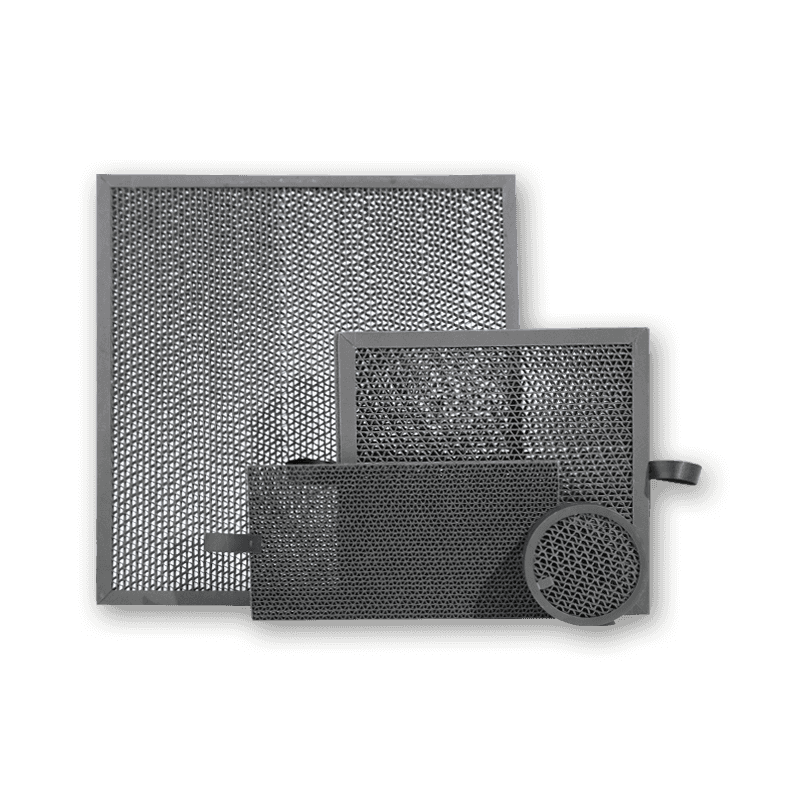
Activated carbon layers are more readily integrated into HVAC systems since they add less airflow resistance than HEPA. Several major manufacturers produce combination filters for standard air filter sizes house HVAC slots — a pleated MERV 11 or 13 particle-capture layer bonded with an activated carbon mesh layer. These combination filters offer dual-action filtration in a single, easy-to-replace unit and represent an excellent middle-ground solution for most households. Examples include 3M Filtrete's Odor Reduction series and Honeywell's Elite Allergen filters.
Specific Use Cases: Which Filter Is Right for Your Situation
The "best" filter is entirely context-dependent. Here is how to think through the decision for the most common household scenarios.
Allergy and Asthma Sufferers
Primary recommendation: HEPA filter, supplemented with activated carbon if chemical sensitivities are also present. The main triggers for allergic rhinitis and asthma — pollen, dust mite fecal particles, pet dander, mold spores — are all particles in the 0.5–100 micron range that HEPA captures with high efficiency. Studies show that running a HEPA air purifier in a bedroom can reduce airborne allergen concentrations by 50–70% over 24 hours in a properly sized room.
Homes with Pets
Both technologies are strongly recommended. HEPA handles pet dander (typically 2.5–10 microns), while activated carbon handles pet odors generated by ammonia compounds in urine and organic volatile compounds from fur and saliva. A dual-filter unit, or a combination HEPA + carbon filter in the correct air filter sizes house HVAC requires, is the most practical solution.
New Construction or Renovation
Primary recommendation: Activated carbon filter, run continuously for 6–12 months. New building materials — pressed wood, paints, adhesives, carpeting, foam insulation — off-gas formaldehyde and a wide range of VOCs at their highest concentrations during the first year of installation. HEPA alone offers no protection from these chemical emissions. Formaldehyde concentrations in newly built homes can reach 0.1 ppm or more, a level above the World Health Organization's 30-minute guideline of 0.1 ppm.
Wildfire Smoke Events
Wildfire smoke is a dual threat: it contains both fine particles (PM2.5, captured by HEPA) and a complex mixture of gases including carbon monoxide, nitrogen oxides, and VOCs (partially handled by activated carbon). During air quality events with AQI above 150, running a combined HEPA + carbon unit on its highest setting in the most-occupied room provides meaningful protection. DIY solutions using a box fan and a 20×20 MERV 13 filter (the "Corsi-Rosenthal box") have been validated by researchers to reduce indoor PM2.5 by over 70% at a fraction of commercial purifier costs.
Cooking Odors and Kitchen Air Quality
Primary recommendation: Activated carbon filter, ideally in a kitchen range hood that exhausts outdoors (preferred) or recirculates through a carbon filter. Cooking generates both particles (cooking oil aerosols, effectively handled by grease mesh pre-filters and HEPA) and volatile gases (acrolein from overheated oils, acetic acid, carbonyl compounds) that only carbon can address. A high-carbon-content range hood filter should be replaced every 3–4 months in households that cook frequently.
Combination Filters: Getting the Best of Both Technologies
For most households, the ideal solution is a multi-stage filtration system that incorporates both technologies. High-end standalone air purifiers typically use this layered approach:
- Pre-filter (washable):Captures large particles — hair, lint, large dust clumps — protecting the more expensive downstream filters and extending their life.
- Activated carbon layer:Adsorbs gases, VOCs, and odors before air reaches the HEPA stage (preventing carbon saturation from particle loading).
- True HEPA filter:Captures remaining fine particles down to 0.3 microns with 99.97%+ efficiency.
- Optional ionizer or UV-C layer:Some units add a fourth stage targeting pathogens, though the evidence base for UV-C effectiveness in consumer purifiers is more limited.
When evaluating combination purifiers, look beyond headline specs to the Clean Air Delivery Rate (CADR) certified by AHAM (Association of Home Appliance Manufacturers). CADR measures actual cubic feet per minute of clean air delivered for dust, pollen, and smoke separately. For a 250 sq ft bedroom with 8-foot ceilings, a minimum CADR of approximately 165 cfm is recommended to achieve approximately 5 air changes per hour — the standard benchmark for effective residential air purification.
Matching correct air filter sizes house setups demand — whether for a standalone purifier or a central HVAC integration — remains critical even in combination systems. An undersized unit running at maximum speed in a large room will never achieve adequate air exchange, while an oversized unit in a small space wastes energy and money.
Environmental and Health Considerations in Filter Selection
Ozone and Secondary Pollutants
Neither HEPA nor standard activated carbon filters generate ozone or secondary pollutants. This is a meaningful advantage over electrostatic precipitators and some ionizer-based systems, which can produce ozone concentrations above EPA indoor guidelines (0.05 ppm). If you are sensitive to ozone — as many asthma patients are — sticking to HEPA and activated carbon technologies is the safest approach.
Filter Disposal and Environmental Impact
Used HEPA filters containing captured mold spores, bacteria, and high concentrations of fine particulate should be sealed in a plastic bag before disposal to prevent re-release. Activated carbon is generally considered non-hazardous for landfill disposal, though some specialized industrial carbons impregnated with chemicals like potassium permanganate require special handling.
From a carbon footprint perspective, the energy consumed by the fan motor running the air purifier or HVAC fan typically represents a larger environmental impact than the filter material itself. High-efficiency DC motors in modern air purifiers consume as little as 3–7 watts at low speed, compared to older AC motor designs drawing 30–50 watts continuously.
What Filters Cannot Do: Important Limitations
Both filter types have clear limitations that are important to communicate honestly:
- Neither filter removes radon gas— a radioactive gas that requires specialized ventilation or soil mitigation systems.
- Neither filter removes carbon monoxide— a deadly combustion byproduct that requires dedicated CO detectors and source elimination.
- HEPA filters do not kill bacteria or viruses they capture — a saturated HEPA filter can potentially become a breeding ground for biological material if not replaced on schedule.
- Activated carbon is ineffective against some polar organic molecules, ammonia (without special impregnation), and most inorganic gases.
- No filter addresses the root causes of indoor air quality problems — ventilation, humidity control, source elimination, and regular cleaning remain essential complements to any filtration strategy.
Final Recommendation: How to Choose
The decision framework is straightforward once you understand each technology's role:
- If your primary concern is allergens, particles, or respiratory health:prioritize a true HEPA filter in a room air purifier with adequate CADR for your room size, supplemented by a MERV 11–13 filter in correct air filter sizes house HVAC systems can accept.
- If your primary concern is odors, chemicals, or new-construction off-gassing:prioritize activated carbon, ensuring the carbon bed weight is substantial (not just a thin mesh layer).
- For most households with mixed concerns:choose a dual HEPA + activated carbon unit from a brand with AHAM CADR certification, replace filters on the manufacturer's schedule, and treat the air purifier as one component of a broader indoor air quality strategy that includes source control and adequate ventilation.
Indoor air quality data consistently shows that Americans spend approximately 90% of their time indoors, where pollutant concentrations can be 2 to 5 times higher than typical outdoor levels according to EPA research. Choosing the right combination of HEPA and activated carbon filtration — sized and maintained correctly — is one of the highest-impact, most cost-effective investments available for long-term respiratory health.