 English
 Español
 日本語
日本語
Living with pets brings comfort and companionship, but it also introduces a constant mix of airborne challenges—pet dander, fine hair fragments, saliva particles, dust mites, and odor compounds released from fur and litter areas. These particles are often too small to be seen, yet they can easily trigger allergic reactions such as sneezing, watery eyes, coughing, or even asthma flare-ups in sensitive individuals. A properly designed air purifier is one of the most effective household solutions for controlling these pollutants, but its real performance depends heavily on the filtration system structure rather than brand marketing claims.
A high-performance air purifier for pet households is typically built around a layered filtration concept. Instead of relying on a single filter type, it combines multiple technologies that target different particle sizes and pollutant categories. The most critical components include a pre-filter for visible pet hair, a True HEPA filter for microscopic allergens, and an activated carbon filter for odors and VOC gases. Among these, the HEPA filter is the core element responsible for capturing invisible allergens that directly affect respiratory health.
Pet owners often underestimate how complex indoor air pollution can be. For example, cat dander particles can be as small as 2.5 microns, while dog allergens can attach to dust particles and remain suspended in air for hours. Meanwhile, odors from litter boxes and pet bedding contain volatile organic compounds that cannot be removed by particle filters alone. Therefore, selecting the correct filter combination is not just about cleanliness—it directly impacts long-term indoor air quality and family health.
HEPA filter: the core weapon against pet allergens
What makes HEPA so important in pet households?
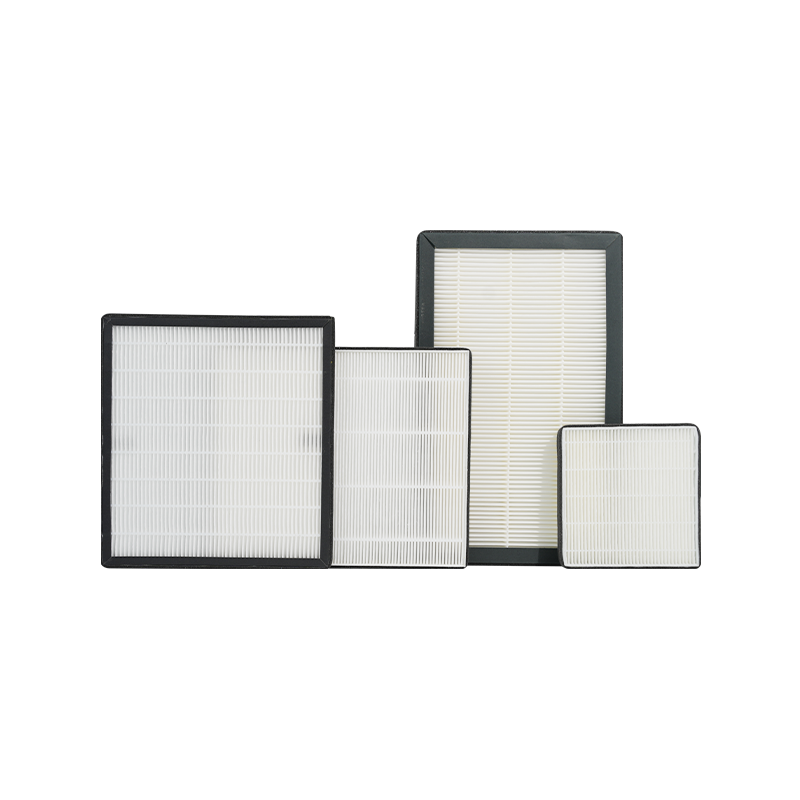
The HEPA (High Efficiency Particulate Air) filter is widely recognized as the most critical component in air purification systems for allergy control. Its primary function is to capture extremely fine particles that are invisible to the human eye, including pet dander, pollen, dust mites, and smoke particles. In pet-owning households, HEPA filters play a particularly important role because pet allergens are lightweight, easily airborne, and tend to circulate continuously due to pet movement, furniture friction, and airflow changes.
True HEPA filters are engineered to capture at least 99.97% of particles as small as 0.3 microns. This size is significant because it represents the most penetrating particle size (MPPS), meaning particles both larger and smaller than 0.3 microns are actually captured with even higher efficiency due to diffusion and interception effects. Pet allergens typically fall well within this range, making HEPA filtration extremely effective for reducing allergen exposure indoors.
However, not all HEPA filters are equal. Many low-cost devices use “HEPA-type” or “HEPA-like” filters, which do not meet the strict efficiency standards. For pet households, using non-certified filters often results in poor allergen control, even if the purifier appears to be working.
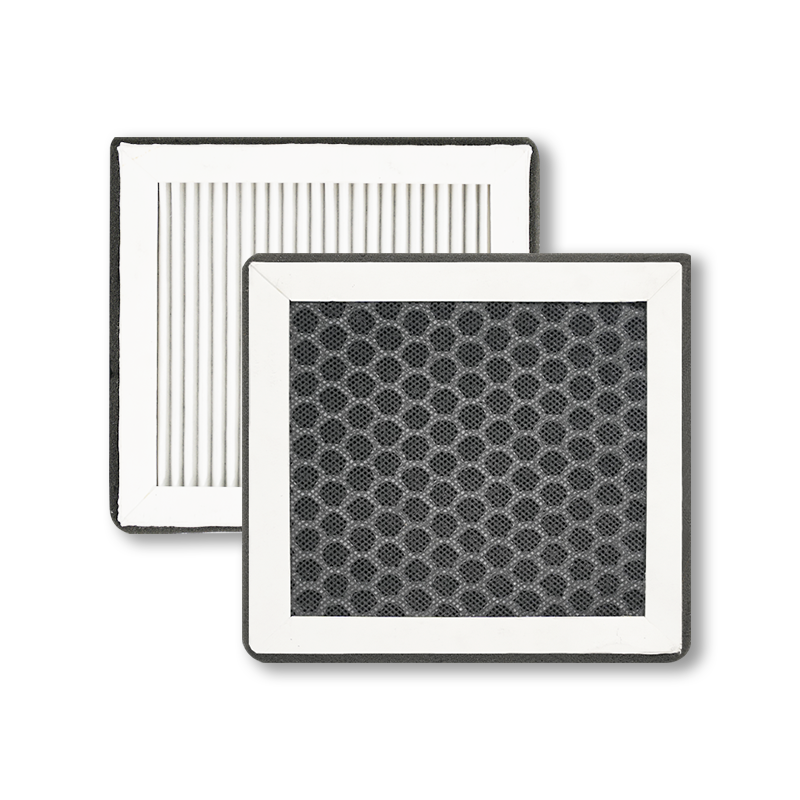
HEPA grades and their suitability for pet homes
Different HEPA standards indicate different filtration efficiencies and resistance levels. Choosing the correct grade affects both air quality and airflow performance.
|
HEPA Grade |
Filtration Efficiency |
Typical Application |
Suitability for Pets |
|
H10–H12 |
85%–99.5% |
Basic household dust removal |
Not recommended for allergies |
|
H13 |
99.95% |
Residential + office air purification |
Best balance for pet households |
|
H14 |
99.995% |
Medical clean rooms, hospitals |
Excellent but airflow resistance is high |
H13 is generally considered the optimal choice for homes with pets. It provides a strong balance between filtration efficiency and airflow resistance, ensuring the purifier can still circulate air effectively in a typical living room or bedroom. H14 filters, while technically superior in efficiency, create significantly higher resistance, which may reduce CADR (Clean Air Delivery Rate) and increase energy consumption in home devices.
Why airflow balance matters as much as filtration efficiency
A common misconception is that higher HEPA grade automatically equals better performance. In reality, if the airflow is too restricted, the purifier cannot process enough air per hour to make a meaningful difference in room air quality. For pet environments, continuous circulation is essential because allergens are constantly being reintroduced into the air.
Therefore, the ideal HEPA filter for pet homes should:
- Maintain high efficiency (preferably H13)
- Allow stable airflow
- Work in synergy with pre-filtration to prevent clogging
Without this balance, even high-grade filters may underperform in real-world conditions.
Pre-filter: The Real Hero for Pet Hair Control
Pet hair is one of the most common and persistent household pollutants, but interestingly, it's not the biggest health hazard. However, it plays a crucial indirect role in the performance of air purifiers. If hair isn't effectively collected, the internal filter quickly becomes clogged, reducing purification efficiency and shortening the device's lifespan.
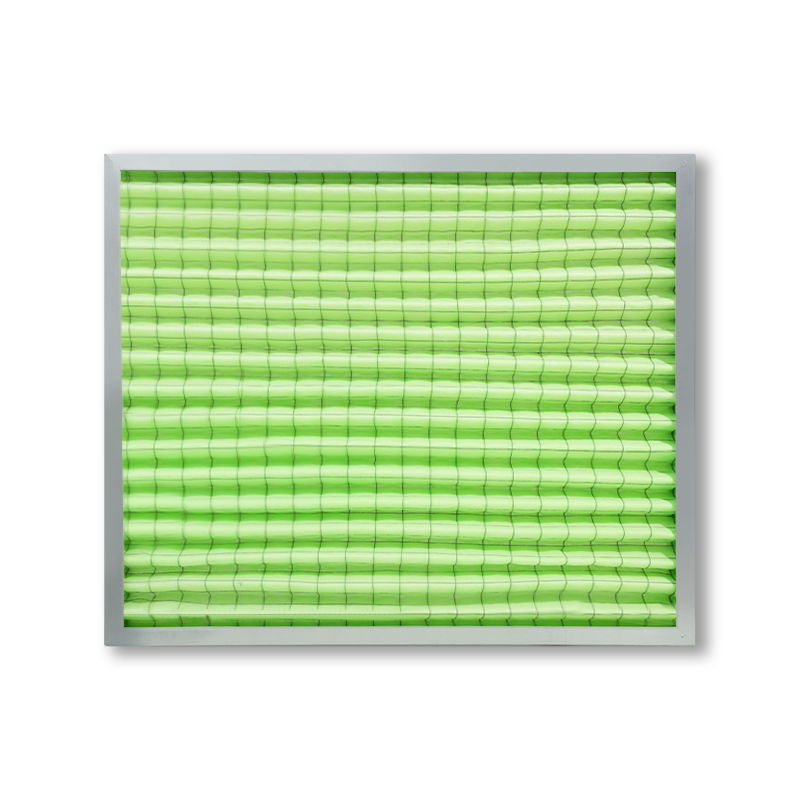
The pre-filter layer is designed for this purpose. Typically made of cylindrical material or synthetic fibers, it traps larger particles such as pet hair, lint, and visible dust before they reach the HEPA filter. This step is critical for pet-owning households, as pets shed continuously.
A well-designed pre-filter system offers several advantages:
- Significantly extends the lifespan of the HEPA filter
- Maintains stable airflow by preventing clogging
- Improves the overall CADR (Clean Air Delivery Rate) stability of the air purifier over time
Activated carbon filter: essential for odor and VOC control
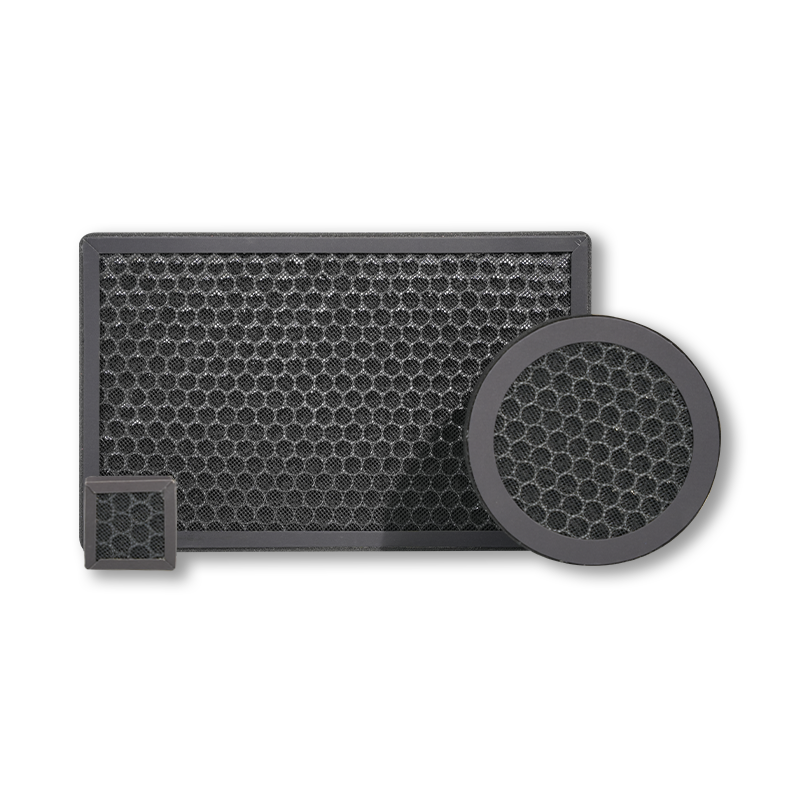
While HEPA filters focus on solid particles, they are completely ineffective against gases and odors. This is where activated carbon filtration becomes essential, especially in pet households where smell control is a daily concern.
Activated carbon works through adsorption, meaning odor molecules physically bind to the porous surface of carbon material. Pet-related odors come from urine, fur oils, saliva residues, and bacterial decomposition, all of which release volatile organic compounds (VOCs). These compounds are responsible for the “pet smell” that often lingers in enclosed spaces.
The effectiveness of carbon filters depends on two key factors:
- Thickness of carbon layer
- Quality (granular vs. impregnated sheet)
Granular activated carbon is significantly more effective because it provides a larger surface area for adsorption. Thin carbon-coated sheets, often found in low-cost purifiers, tend to saturate quickly and lose effectiveness.
Why odor control requires more than just filtration
Unlike particles, odor molecules are chemically active gases that require sufficient contact time with carbon material. This means airflow speed and carbon density must be carefully balanced. If air passes too quickly, adsorption efficiency decreases. If carbon layer is too thin, it saturates rapidly.
For pet owners, this layer is especially important in areas such as:
- Litter box rooms
- Pet sleeping zones
- Closed bedrooms with pets
- Small apartments with limited ventilation
Without effective carbon filtration, even a high-end HEPA purifier may still leave noticeable pet odors in the environment.
Best filter combination for pet owners
A high-performance air purification system for pet households is not defined by a single filter, but by a multi-layer filtration architecture. Each layer has a distinct role, and their synergy determines overall effectiveness.
The optimal structure is:
- Pre-filter → captures visible pet hair
- True HEPA (H13 recommended) → captures allergens and fine particles
- Activated carbon → removes odors and VOCs
Below is a simplified comparison of filter functions:
|
Filter Layer |
Main Function |
Target Pollutants |
Importance Level |
|
Pre-filter |
Hair and dust capture |
Pet hair, lint |
High |
|
HEPA (H13) |
Allergen removal |
Dander, pollen, fine dust |
Critical |
|
Activated carbon |
Odor control |
VOCs, pet smell |
Critical |
This combination ensures a comprehensive approach: visible pollutants are captured first, microscopic allergens are removed next, and gaseous odors are neutralized last. Together, they create a stable indoor environment suitable for allergy-sensitive individuals and multi-pet households.
Common mistakes pet owners make when choosing filters
One of the most frequent mistakes is focusing only on HEPA grade while ignoring system balance. A high-grade HEPA filter alone does not guarantee good air quality if airflow is weak or if pre-filtration is missing. Another common issue is underestimating odor control, assuming HEPA filters can remove smells, which they cannot.
Other mistakes include:
- Not cleaning pre-filters regularly
- Choosing devices with thin carbon layers
- Using oversized purifiers for small rooms or vice versa
- Ignoring CADR (air exchange rate)
Effective air purification requires a holistic approach where filtration, airflow, and maintenance work together.
FAQ
Q1: Is HEPA filter enough for pet allergies?
No. HEPA filters are essential for allergens, but they do not remove odors or pet hair. A full system including pre-filter and activated carbon is necessary for complete air quality control.
Q2: What is the best HEPA grade for pet owners?
H13 is generally the best balance between efficiency and airflow for home use. H14 is more efficient but often unnecessary for standard residential environments.
Q3: How often should I clean the pre-filter?
In pet households, every 1–2 weeks is recommended, depending on shedding level and number of pets.
Q4: Can activated carbon filters remove all pet smells?
They significantly reduce odors, but performance depends on carbon thickness and saturation level. Strong or long-term odors may require frequent filter replacement.
Q5: Do air purifiers remove pet hair from furniture?
No. Air purifiers only capture airborne particles. Pet hair on surfaces still requires vacuuming or cleaning.
References
- S. Environmental Protection Agency (EPA), “Guide to Air Cleaners in the Home”
- World Health Organization (WHO), Indoor Air Quality Guidelines
- ASHRAE (American Society of Heating, Refrigerating and Air-Conditioning Engineers) Filtration Standards
- European Committee for Standardization (CEN), EN 1822 HEPA Classification Standard
- Journal of Aerosol Science, studies on particulate filtration efficiency and HEPA performance mechanisms