 English
 Español
 日本語
日本語
What Matters Most When Buying a Photocatalyst Filter
The short answer is this: a good photocatalyst filter is defined by six things — catalyst material quality, UV light wavelength and intensity, airflow and CADR rating, ozone-free safety certification, filter lifespan and replacement cost, and compatibility with your room size or HVAC system. If a product performs well on these six factors, it will reliably break down odors, VOCs (volatile organic compounds), bacteria, and mold spores into harmless byproducts like water vapor and carbon dioxide, rather than simply trapping them like a traditional filter does.
Photocatalyst filters have become a popular upgrade for home and office air purification because they actively decompose pollutants instead of just capturing them. That said, not all products labeled "photocatalyst" perform the same way, and the difference between a high-quality unit and a low-quality one often comes down to details that are easy to overlook on a spec sheet.
What Is a Photocatalyst Filter and How Does It Work
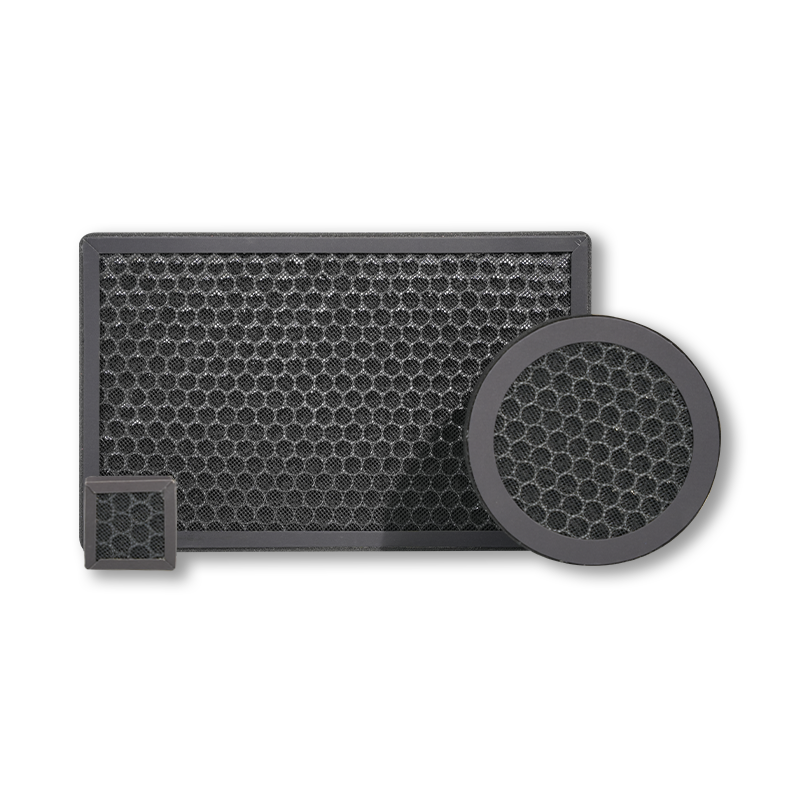
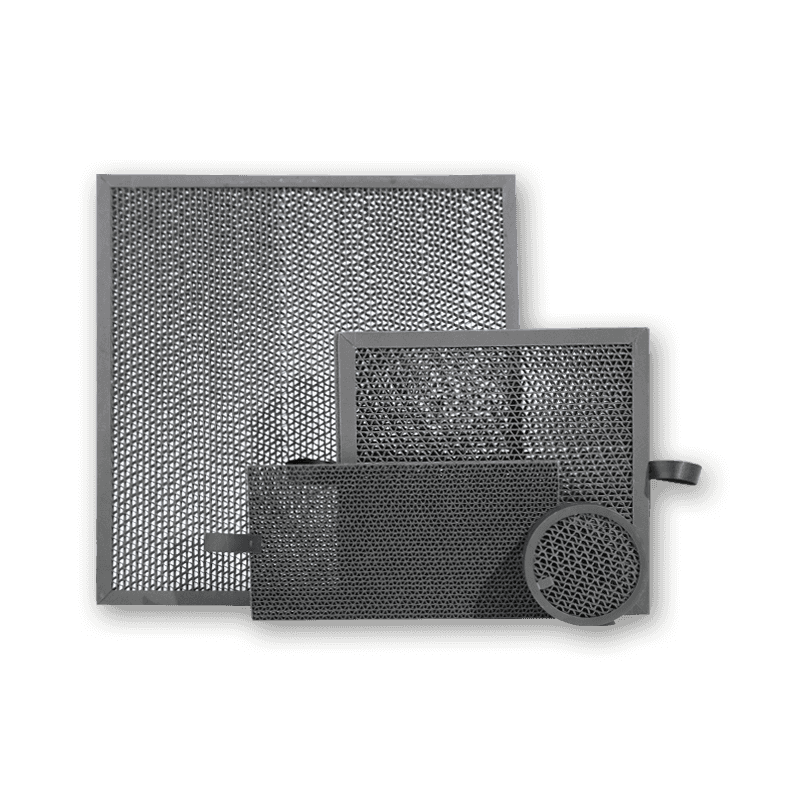
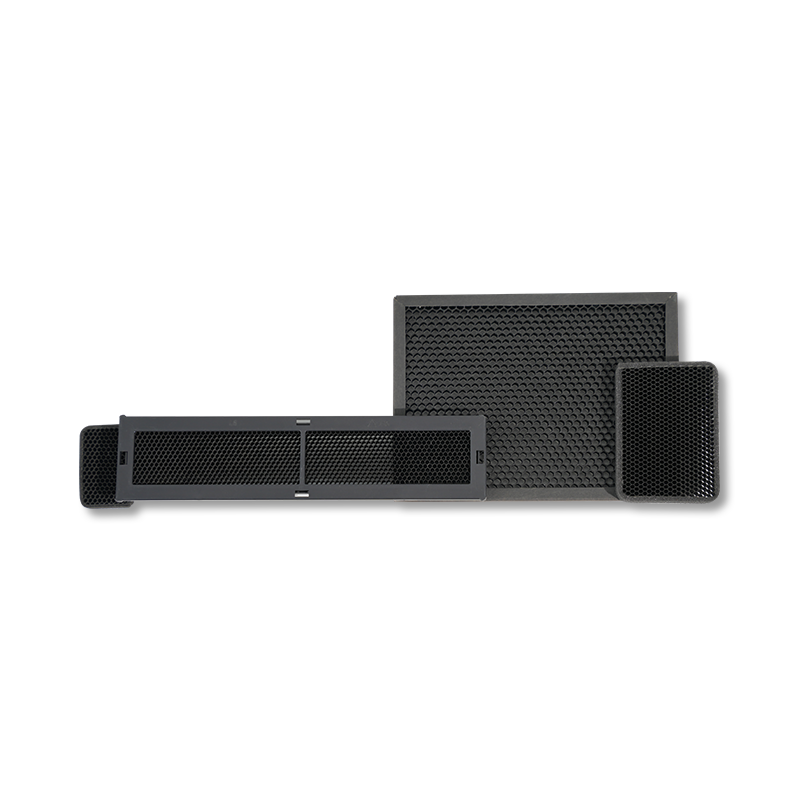
A photocatalyst filter uses a semiconductor material — most commonly titanium dioxide (TiO2) — coated onto a substrate such as fiberglass mesh, aluminum honeycomb, or ceramic fiber. When this coating is exposed to ultraviolet (UV) light, it triggers a chemical reaction that generates reactive oxygen species, including hydroxyl radicals and superoxide ions. These reactive molecules oxidize organic pollutants on contact, breaking them down into simple, harmless compounds like water and carbon dioxide.
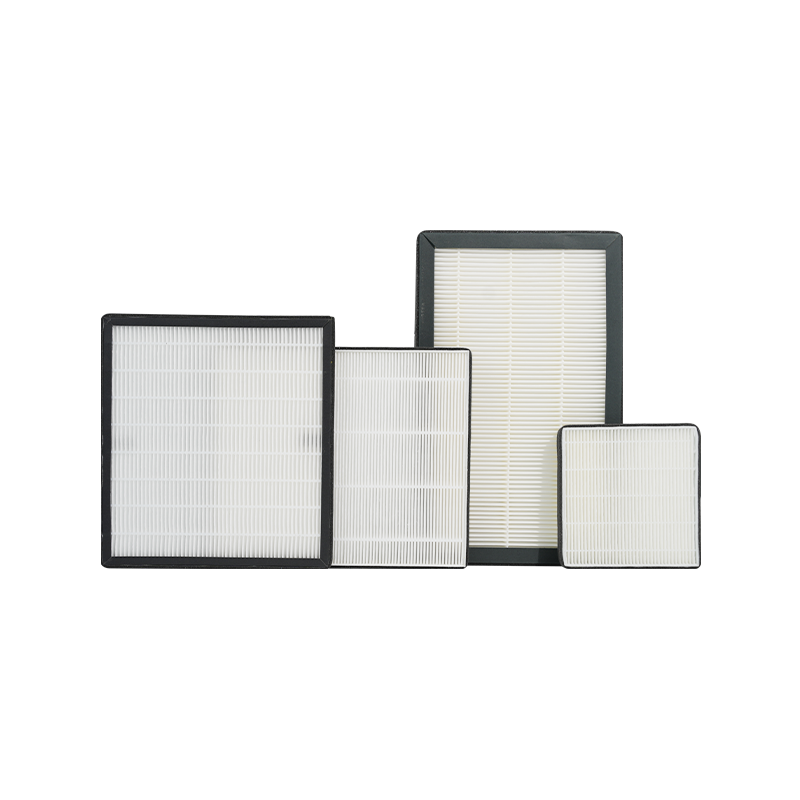
This is fundamentally different from a HEPA (High-Efficiency Particulate Air) filter, which physically traps particles in a dense mesh but does not neutralize gases or odors. It's also different from an activated carbon filter, which absorbs odors and VOCs through porous carbon but eventually becomes saturated and needs replacement. A well-designed photocatalyst filter continuously regenerates its cleaning ability as long as the UV light source is active, which is one of its most attractive long-term advantages.
Why This Matters for Buyers
Understanding this mechanism helps explain why the buying factors below focus heavily on the catalyst coating and the UV source — these two components, working together, are the actual engine of performance. A filter with a weak UV lamp or a thin, low-grade coating will underperform no matter how attractive its housing or marketing looks.
Factor 1: Catalyst Material and Coating Quality
The catalyst coating is the single most important variable in a photocatalyst filter's performance. Anatase-phase TiO2 is generally considered the most effective and stable form for air purification, offering strong photocatalytic activity under UV light while remaining chemically inert and safe. Some premium filters use nitrogen-doped or silver-doped TiO2, which can activate under a broader spectrum of light and offer added antimicrobial benefits.
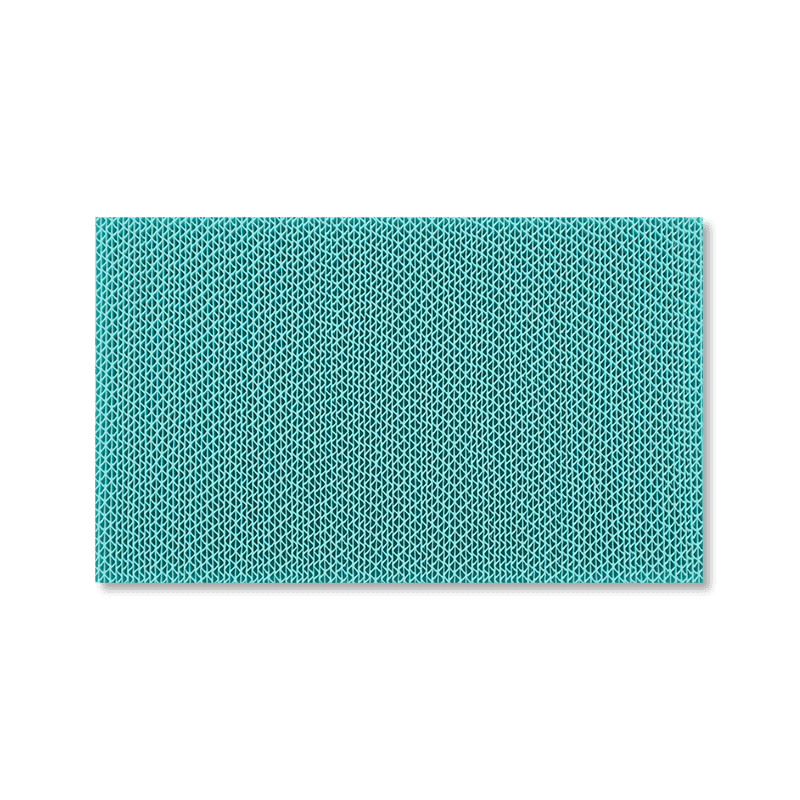
When comparing products, look for manufacturers who disclose the coating type, coating density (often measured in grams per square meter), and the substrate material. A denser, evenly applied coating on a high-surface-area substrate (such as a honeycomb or corrugated mesh design) will expose pollutants to more catalytic surface area, improving the decomposition rate. Filters that only vaguely mention "nano-coating" without specifics are harder to evaluate and may use lower-grade materials.
- Look for named catalyst types: anatase TiO2, doped TiO2, or other named photocatalysts.
- Check whether the coating covers a high-surface-area substrate rather than a flat, low-density screen.
- Favor brands that publish third-party lab test results for VOC or odor decomposition rates.
Factor 2: UV Light Wavelength and Intensity
TiO2-based photocatalysis is typically activated most efficiently by UV-A light in the 320–400 nanometer range, with peak efficiency often cited around 365 nm. A filter's UV lamp (or increasingly, UV-LED array) needs to deliver light within this effective range at sufficient intensity to keep the reaction running continuously. A dim or mismatched light source means the catalyst coating is essentially inactive, even if the coating itself is high quality.
Newer models increasingly use UV-LED technology instead of traditional mercury-vapor UV lamps. UV-LEDs offer several practical advantages: they reach full brightness instantly, they typically last 20,000 to 50,000 hours compared to roughly 8,000–10,000 hours for standard UV tubes, and they contain no mercury, making disposal simpler and safer. When comparing two similarly priced filters, one with UV-LED illumination generally offers better long-term value because the light source rarely needs replacing during the product's usable life.
Practical Tip
Ask the seller or check the manual for the rated UV output in milliwatts and the wavelength range. If this information is unavailable, treat it as a signal to compare with other brands that are more transparent about their specifications.
Factor 3: Airflow Design and CADR Rating
Even the best catalyst coating and UV source will underperform if air does not spend enough time in contact with the filter surface. This is why CADR (Clean Air Delivery Rate), measured in cubic feet per minute (CFM) or cubic meters per hour (m³/h), is such an important number to compare. CADR tells you how much clean air the unit can produce per unit of time for a specific pollutant category, such as smoke, dust, or pollen.
A helpful rule of thumb is that the unit's CADR (in CFM) should be at least two-thirds of the room's square footage for a room with 8-foot ceilings, which corresponds to roughly five air changes per hour — a level widely recommended for effective air cleaning. Below is a simplified reference table matching room size to a reasonable target CADR.
|
Recommended minimum CADR by room size for effective photocatalyst air cleaning |
||
|
Room Size (sq ft) |
Recommended CADR (CFM) |
Typical Use Case |
|
100–150 |
70–100 |
Bedroom, home office |
|
150–300 |
100–200 |
Living room, small studio |
|
300–500 |
200–330 |
Open-plan apartment, large office |
|
500+ |
330+ or multiple units |
Commercial space, whole-home HVAC integration |
If you plan to install the filter inside a central HVAC duct rather than as a standalone unit, confirm that its dimensions and static pressure rating are compatible with your system, since duct-mounted units rely on your existing blower to move air through them.
Factor 4: Ozone-Free Safety and Certifications
One important nuance of photocatalytic oxidation is that, if poorly engineered, some reactions can produce trace ozone or incomplete oxidation byproducts as a side effect. High-quality filters are specifically engineered and tested to minimize this risk, and reputable manufacturers will state that their product is ozone-free or that ozone output falls well under recognized safety limits, such as the 0.050 ppm threshold commonly referenced in indoor air quality standards.
Look for independent certifications and test markings, which give you third-party assurance beyond the manufacturer's own claims. Useful certifications and markings to check for include:
- UL (Underwriters Laboratories) electrical safety and ozone emission testing
- CARB (California Air Resources Board) certification for air cleaning devices
- Energy Star certification for energy efficiency
- Third-party lab reports on VOC decomposition and ozone byproduct levels
A product carrying two or more of these certifications is a strong signal that it has been independently vetted, which is especially reassuring for households with children, elderly family members, or anyone sensitive to indoor air quality.
Factor 5: Filter Lifespan and Long-Term Cost
One of the biggest advantages of photocatalyst filters over carbon-based filters is longevity. Because the catalyst decomposes pollutants rather than absorbing them, a well-made coating does not "fill up" the way carbon does. Many quality photocatalyst filters are rated to last 2 to 3 years of continuous use before the coating needs recoating or replacement, compared to the 3 to 6 months typical of standard carbon filters.
When calculating true cost of ownership, add up the upfront price, the estimated cost of replacement coatings or cartridges, and the electricity used by the UV source (typically low, often under 10 watts for LED-based units). A filter that costs more upfront but lasts three times as long, with a low-power UV-LED source, will often be the more economical choice over a two-to-three-year period.
|
Approximate lifespan comparison across common air filtration technologies |
||
|
Filter Type |
Typical Lifespan |
Main Replacement Trigger |
|
Activated carbon |
3–6 months |
Carbon saturation |
|
HEPA |
6–12 months |
Particle load / airflow drop |
|
Photocatalyst (UV lamp) |
1–2 years |
UV lamp burnout |
|
Photocatalyst (UV-LED) |
2–3 years |
Coating refresh cycle |
Factor 6: Compatibility with Your Space and System
Before purchasing, confirm the product's physical fit and use case. Standalone units are best for single rooms and offer flexibility to move between spaces, while duct-mounted photocatalyst modules integrate into central HVAC systems to treat air throughout an entire home or office in one pass. Measure your duct dimensions carefully if choosing an in-duct model, and confirm your blower can handle the added static pressure.
Noise level is another practical consideration, especially for bedrooms or shared workspaces. Look for a stated decibel (dB) rating at the fan speed you expect to use most — many quality units operate in the 25–45 dB range on lower settings, which is comparable to a quiet library or soft background hum. Finally, check for smart features such as air quality sensors, automatic speed adjustment, and filter-life indicators, which make ongoing maintenance easier and help ensure the unit is always operating at its most effective setting.
How Photocatalyst Filters Compare to Other Filtration Technologies
Many buyers are deciding between photocatalyst, HEPA, and activated carbon options, or looking for a combination unit. Each technology has distinct strengths, and understanding them helps you choose — or combine — the right approach for your needs.
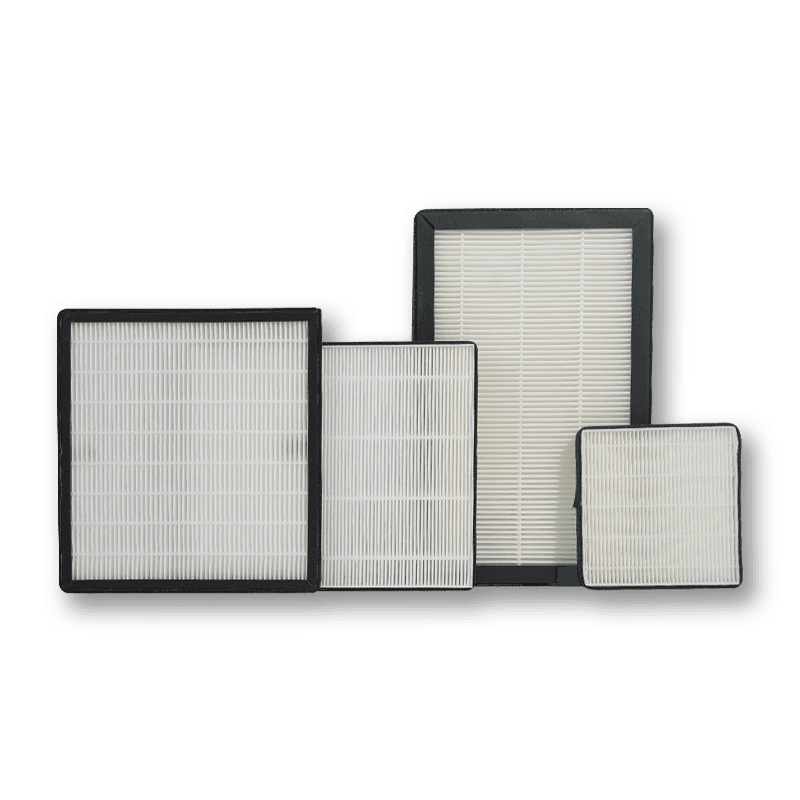
|
Strengths of common air filtration technologies by pollutant type |
||
|
Technology |
Best At |
Limitation |
|
Photocatalyst |
Odors, VOCs, bacteria, mold spores |
Needs UV source running continuously |
|
HEPA |
Fine dust, pollen, pet dander |
Does not remove gases or odors |
|
Activated carbon |
Smoke odor, chemical fumes |
Saturates and needs frequent replacement |
In practice, many top-performing air purifiers combine a HEPA pre-filter to capture particles with a photocatalyst stage to neutralize odors and gases, giving you the best of both approaches. If your primary concern is cooking smells, pet odors, or chemical off-gassing from new furniture, a photocatalyst filter offers a genuine, well-documented advantage over particle-only filtration.
Step-by-Step Buying Checklist
Use the following checklist to evaluate any photocatalyst filter before purchase. Working through these steps in order will help you compare products quickly and confidently.
- Confirm the catalyst type (e.g., anatase TiO2) and coating substrate.
- Check the UV source type — prefer UV-LED for longevity — and its rated wavelength.
- Match the CADR rating to your room size using the reference table above.
- Verify ozone-free performance and look for UL, CARB, or Energy Star certification.
- Calculate total cost of ownership, including expected coating or lamp replacement.
- Check physical dimensions and noise rating against your intended installation space.
- Look for a manufacturer warranty of at least one year and responsive customer support.
Maintenance Tips to Maximize Performance and Lifespan
Once you've chosen a filter, a small amount of routine care keeps it performing at its best for years. Wipe down the intake grille and pre-filter every two to four weeks to prevent dust buildup from blocking airflow, since reduced airflow lowers the amount of pollutants that reach the catalyst surface. Keep the unit running on a low, continuous setting rather than turning it fully off and on, since the photocatalytic reaction is most effective with steady exposure to airflow and UV light.
Most manufacturers recommend inspecting or replacing the UV lamp (if not using UV-LED) roughly once a year, since gradual dimming reduces catalytic efficiency even if the light still visibly glows. Finally, keep the unit in an open area with good air circulation rather than tucked behind furniture, so that room air can reach the intake efficiently. Following these simple habits typically extends effective filter life by 20% to 30% compared to units that receive no regular maintenance.